What Is the Proper Way to Support?
The question of “proper” breath support has generated considerable debate in voice pedagogy. Two main approaches have emerged, each with theoretical justification and practical adherents. Understanding both—and recognizing individual variability—is essential for effective teaching.
Two Prevalent Approaches
The Pear-Shape-Up Approach
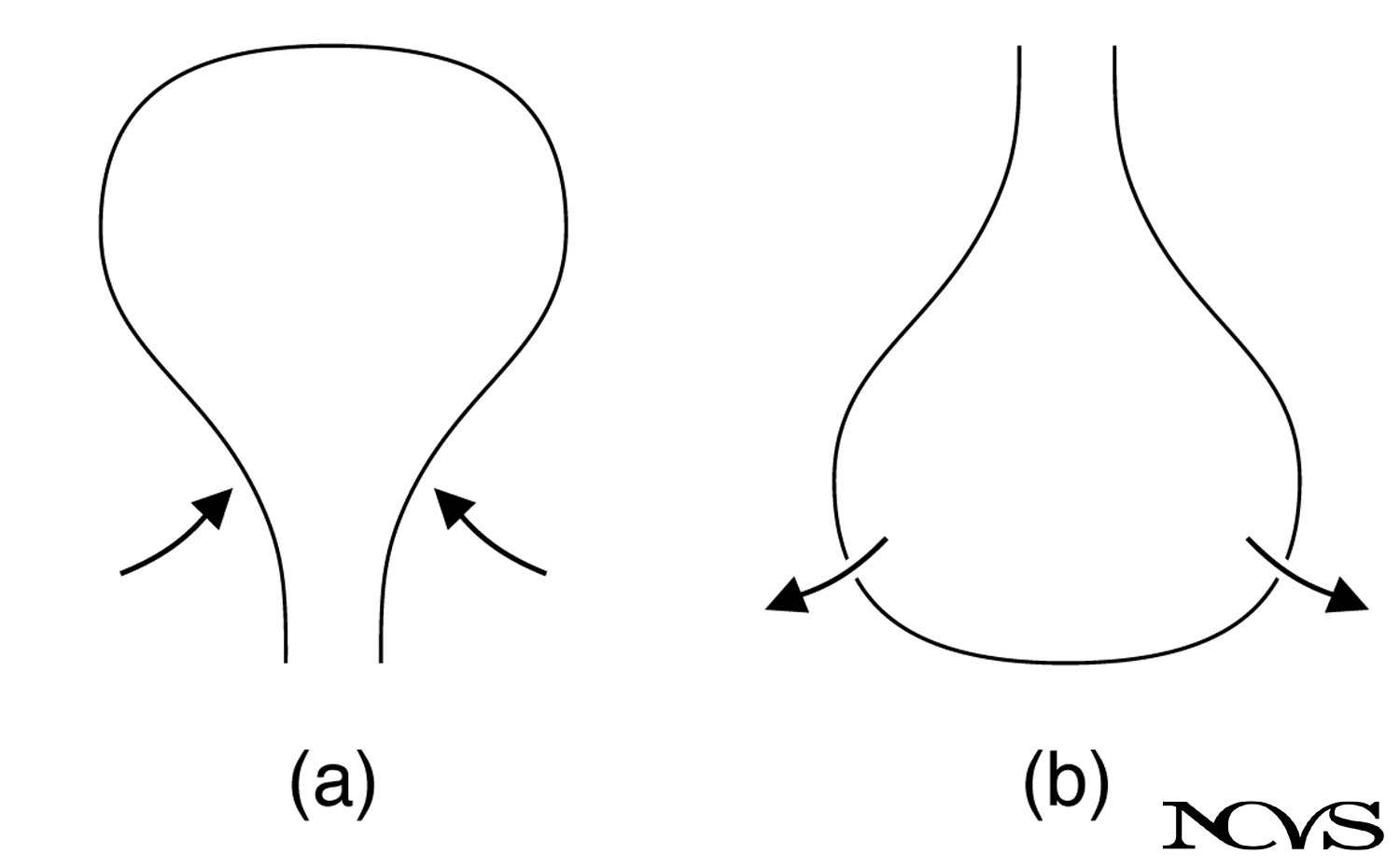 Figure 3.15: The pear-shape-up and pear-shape-down images of breath support during phonation.
Also called: “Up-and-in method”
Primary emphasis:
- Keeping rib cage high and stable
- Minimal rib cage contraction or expansion
- Softer tissues (diaphragm, abdomen) do the pumping
- Breath support “from below”
Theoretical basis: With minimum rib cage movement, the more flexible tissues underneath can handle air management more efficiently. This presumably:
- Saves energy by preventing rib cage “heaving”
- Reduces unnecessary upper body movement
- Focuses effort on more controllable abdominal region
- Maintains consistent thoracic cavity shape
Proponents argue:
- More efficient energy use
- Better control of expiratory force
- Reduced visual distraction (less upper body movement)
- Clearer proprioceptive feedback from stable landmark
The Pear-Shape-Down Approach
Also called: “Down-and-out method”
Primary emphasis:
- Less focus on rib cage position
- Maintaining stable abdominal pressure
- Pressure distributed downward and outward
- Lower abdomen, buttocks, and pelvic floor engagement
Theoretical basis: Distributing pressure broadly throughout the lower torso:
- Involves more of the entire body in sound production
- Prevents crowding of larynx by rib cage and trachea
- Avoids “shallow” sound from upper-body dominance
- Creates more substantial foundation for tone
Proponents argue:
- Prevents laryngeal crowding
- Creates more “grounded” tone quality
- Engages core musculature more completely
- Provides more stable foundation for high notes
Physiological Considerations
Recent research by Hixon and colleagues provides insight into respiratory mechanics:
Rib Cage vs. Abdominal Contributions
Both structures contribute across the expiratory phase:
Early expiration (high lung volume):
- Elastic recoil is primary force
- Diaphragm may remain engaged (pear-shape-up element)
- Rib cage contribution through passive recoil
- Abdominal muscles relatively relaxed
Mid expiration:
- Internal intercostals engage (rib cage)
- Abdominal muscles begin contributing (pear-shape-down element)
- Both systems work together
- Smooth transition required
Late expiration (low lung volume):
- Abdominal muscles dominant (pear-shape-down)
- Must overcome negative elastic recoil
- Rib cage may assist through internal intercostals
- Maximum muscular effort phase
Implication: Effective support may require elements of BOTH approaches at different points in the phrase!
Body Type Considerations
Research by Hoit and Hixon (1986) demonstrates body type influences optimal strategy:
Endomorph (rounder body):
- More abdominal mass
- Greater inertia to overcome
- May benefit from pear-shape-up stability
- Rib cage elevation helps manage abdominal weight
Ectomorph (leaner body):
- Less abdominal mass
- Greater flexibility
- May adapt well to pear-shape-down
- Broader distribution of effort works efficiently
Mesomorph (muscular body):
- Strong musculature throughout
- May succeed with either approach
- Can generate substantial forces both ways
- Choice may depend on training history
Postural Effects
Body position affects mechanical advantage:
Upright posture:
- Gravity assists in pear-shape-down approach
- Abdominal contents press downward naturally
- Rib cage benefits from vertical alignment
Seated or reclined:
- Changes force vectors
- May favor different strategy
- Requires adaptive coordination
Research by Sundberg et al. (1991) shows the system makes appropriate adjustments across postures, but conscious strategy may need modification.
The Image vs. Reality Problem
A critical caveat: what is thought to happen may not match physiological reality.
Mental Images
Pedagogical imagery serves important functions:
- Provides concrete goals
- Focuses attention strategically
- Creates kinesthetic targets
- Facilitates motor learning
Actual Mechanics
But mechanical reality is complex:
- Multiple muscles contribute simultaneously
- Neural reflexes operate subconsciously
- Elastic forces vary with lung volume
- Integration occurs automatically
The Disconnect
“Pear-shape-up” students may actually:
- Engage abdominal muscles more than they realize
- Use rib cage movement despite the stable image
- Benefit from the attention/focus rather than mechanics
“Pear-shape-down” students may actually:
- Maintain more rib cage stability than recognized
- Use diaphragmatic bracing in early expiration
- Benefit from psychological grounding rather than force distribution
Key insight: The IMAGE may succeed by directing attention productively, even if mechanical interpretation is imperfect.
Reversals and Balance
Oscillating Images
Many experienced teachers report:
- Occasional reversal of images is useful
- Helps bring things “back to center”
- Prevents exaggeration in either direction
- Maintains flexibility and balance
Individual Responses
Students/clients respond differently:
- Some thrive with pear-shape-up imagery
- Others connect better with pear-shape-down
- Response may vary with:
- Body type and structure
- Previous training
- Psychological makeup
- Cultural background
- Specific repertoire demands
Avoiding Rigidity
Danger: Rigid adherence to single approach
Better: Flexible, individually-tailored strategy that:
- Respects anatomical and psychological differences
- Adjusts to specific vocal demands
- Allows natural coordination to emerge
- Monitors outcomes rather than dogma
Practical Application Guidelines
Assessment Phase
Observe current pattern:
- What is the student/client doing naturally?
- Where are primary movements occurring?
- What seems effortful vs. easy?
- What are the acoustic outcomes?
Identify needs:
- Insufficient breath support?
- Excessive tension?
- Irregular pressure control?
- Coordination problems?
Intervention Selection
Consider:
- Body type and structure
- Previous training and habits
- Psychological factors
- Performance context
Try:
- Alternative images and strategies
- Careful observation of outcomes
- Student/client feedback on sensations
- Objective measures if available
Outcome Monitoring
Prioritize:
- Voice quality (primary outcome)
- Ease and comfort (sustainability)
- Phrase length and consistency (functional)
- Long-term vocal health (essential)
Adjust if:
- Desired outcomes not achieved
- Undue strain or discomfort
- Voice quality deteriorates
- Pattern not sustainable
Research Perspectives
What We Know
Hixon and colleagues have clarified:
- Respiratory muscles’ mechanical actions
- Pressure-volume relationships
- Coordination patterns in trained singers
- Effects of body position and lung volume
What Remains Unclear
Open questions include:
- Optimal strategies for different voice types
- Role of psychological/attentional factors
- Long-term effects of different approaches
- Interaction with laryngeal technique
Clinical Implications
Given incomplete knowledge:
- Avoid dogmatic prescriptions
- Monitor outcomes carefully
- Respect individual differences
- Remain open to emerging evidence
Summary
Two prevalent breath support approaches exist: pear-shape-up (stable rib cage, abdominal pumping) and pear-shape-down (stable abdominal pressure, broad distribution). Recent research suggests effective support may incorporate elements of both approaches at different points in the expiratory phase. Body type, posture, and individual differences influence optimal strategy. Pedagogical images may succeed by directing attention productively, even if mechanical interpretation is imperfect. Rigid adherence to single approach is less effective than flexible, individually-tailored strategies focused on functional outcomes.
Key Takeaways
- ✅ Pear-shape-up emphasizes stable rib cage; pear-shape-down emphasizes stable abdominal pressure
- ✅ Effective support may require elements of BOTH approaches at different expiratory phases
- ✅ Body type (endomorph vs. ectomorph) influences optimal strategy
- ✅ Rigid formulas are less effective than individually-tailored, outcome-focused approaches
Related Topics
Further Reading
- Hixon, T. J., & Hoffman, C. (1979). Chest wall shape in singing. In V. Lawrence (Ed.), Transcripts of the Seventh Symposium on Care of the Professional Voice. New York: Voice Foundation.
- Hoit, J., & Hixon, T. (1986). Body type and speech breathing. Journal of Speech and Hearing Research, 29, 313-324.
- Sundberg, J., Leanderson, R., von Euler, C., & Knutsson, E. (1991). Influence of body posture and lung volume on subglottal pressure control during singing. Journal of Voice, 5(4), 283-291.