Measurement of Lung Pressure
Accurate measurement of lung pressure is essential for research and clinical applications in voice science. This section explores measurement principles and practical techniques.
Pressure Range in Speech
Before discussing measurement methods, it’s helpful to understand typical pressure values:
- Conversational speech: 0.3 to 1.2 kPa
- Average conversational: ~0.7 kPa
- Moderately loud speech: ~1.0 kPa (useful reference value)
- Maximum phonation: Up to 3 kPa
- High-effort phonation (shouting): Up to 6 kPa
These values are small fractions of atmospheric pressure—approximately 1-10% of an atmosphere.
Pressure Measurement Units
Liquid Column Height
Pressure can be measured in terms of liquid column height. Atmospheric pressure, for example, equals:
- 760 mm of mercury (Hg)
- 1,034 cm of water (H₂O)
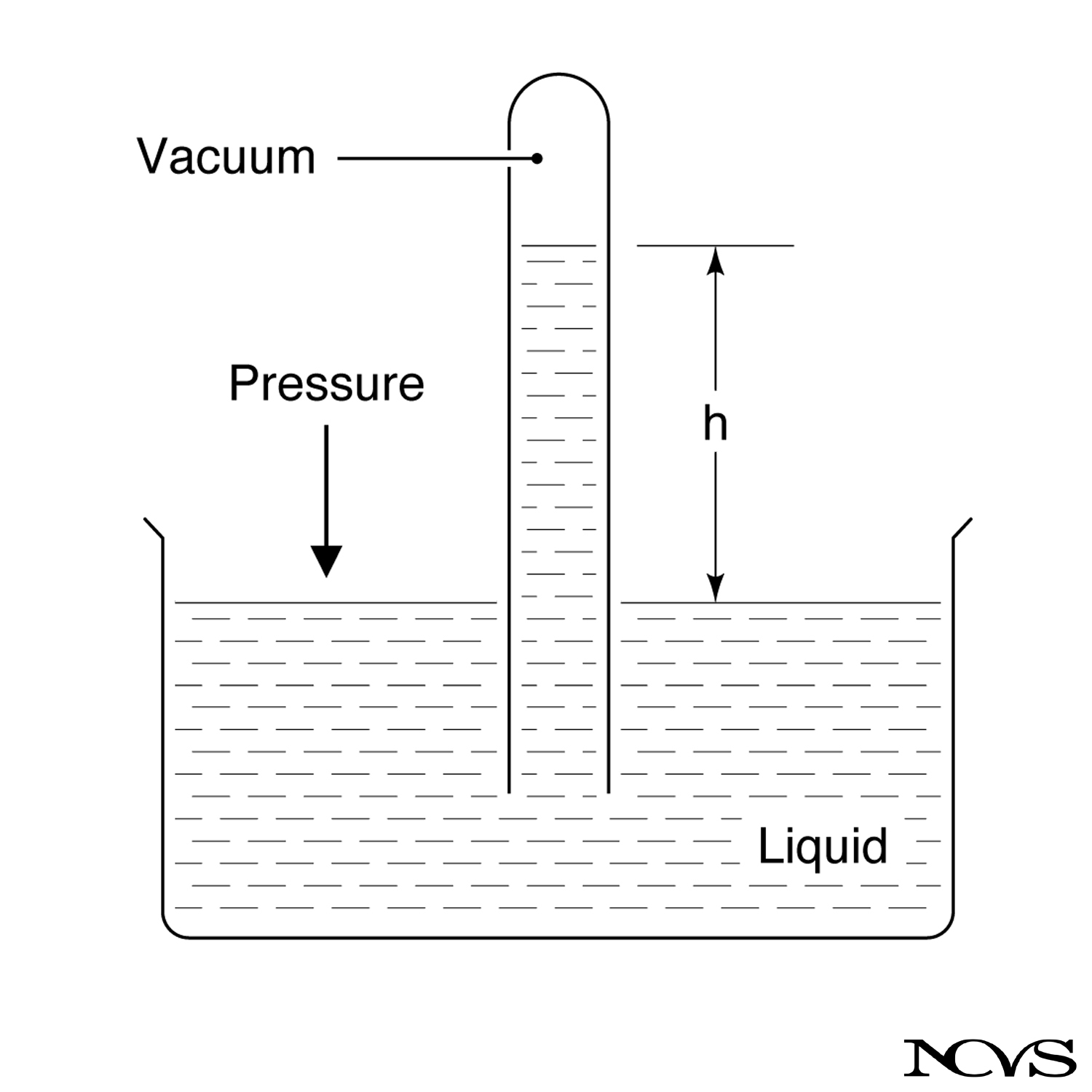 Figure 3.4: Measurement of absolute (atmospheric) pressure in terms of a column of liquid in a closed tube.
Since lung pressure in speech represents only a small fraction of atmospheric pressure, water is used in manometers rather than mercury. Water weighs 13.6 times less than mercury, making pressure changes more easily visible. Even with water, typical speech pressures produce water columns of only a few centimeters.
Conversion Factors
Understanding unit conversions is helpful:
- 1 kPa ≈ 10 cm H₂O (10.2 cm H₂O more precisely)
- 1 cm H₂O ≈ 98 Pa
- Typical conversational lung pressure of 0.5–1 kPa is therefore about 5–10 cm H₂O
Measurement Techniques
The U-Tube Manometer
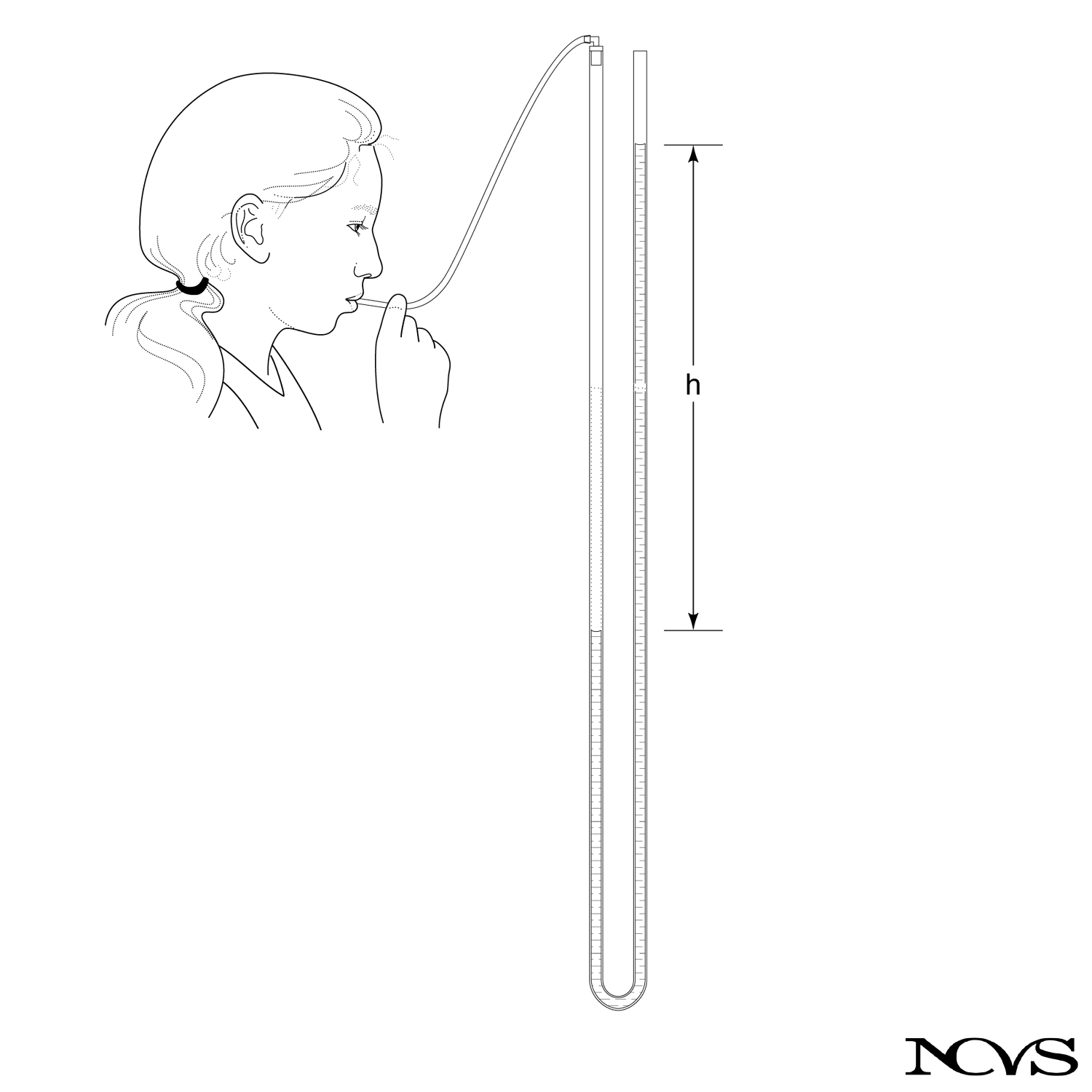 Figure 3.5: Measurement of relative (gauge) pressure with an open-tube manometer.
The U-tube manometer provides a simple demonstration of pressure measurement. Initially filled halfway with water on both sides, with atmospheric pressure maintained at one open end, a differential height of at least 10 kPa (100 cm H₂O) can be maintained by blowing into the other end.
Limitations for phonation studies:
- Blocks all airflow (occludes the airway)
- Cannot measure pressure during phonation
- Requires static (non-flowing) conditions
Greater pressures are possible when combined with cheek muscle compression, as in playing brass instruments. However, this isn’t achievable during speech or singing since the mouth remains open most of the time, allowing air to escape.
Clinical Measurement Devices
For measuring lung pressure during active phonation or breathing, other devices are required:
Body Plethysmograph
A sealed chamber surrounding the subject. Changes in chamber pressure or volume reflect respiratory movements and can be calibrated to indicate lung pressure.
Advantages:
- Non-invasive
- No airway occlusion
Disadvantages:
- Expensive
- Limits subject movement
- Indirect measurement
Esophageal Balloon
A small balloon catheter placed in the esophagus approximates pleural pressure, which closely correlates with lung pressure.
Advantages:
- Reasonably accurate
- Allows normal phonation
Disadvantages:
- Invasive
- Requires medical supervision
- Some discomfort
Tracheal Catheter
Direct measurement via puncture through the tracheal wall or insertion through the larynx under anesthesia.
Advantages:
- Direct measurement
- High accuracy
Disadvantages:
- Highly invasive
- Medical procedure required
- Not suitable for routine assessment
Pressure in Different Contexts
Relation to Atmospheric Pressure
Even maximum phonatory lung pressure (6 kPa) represents only about one-tenth of atmospheric pressure. This is scientifically fortunate because it allows simplifying assumptions about acoustic pressures in the vocal tract (discussed in Chapters 5 and 6).
The relatively small magnitude of speech pressures means:
- Air density remains essentially constant
- Compressibility effects are minimal
- Linear acoustic theory applies
Blowing vs. Phonating
It’s important to distinguish between:
Maximum blowing pressure (with airway occluded):
- Can exceed 10 kPa
- Not achievable during phonation
- Not relevant to speech or singing
Phonatory pressure (with airflow):
- Typically 0.3-3 kPa
- Limited by airflow requirements
- Directly relevant to voice production
Summary
Lung pressure measurement requires techniques appropriate to the research or clinical question. While simple U-tube manometers effectively demonstrate pressure principles, measuring pressure during active phonation requires more sophisticated methods. Understanding typical pressure ranges and units is essential for interpreting research literature and clinical findings.
The relatively small magnitude of speech pressures (compared to atmospheric pressure) simplifies acoustic analysis while still providing sufficient aerodynamic power for effective voice production.
Key Takeaways
- ✅ Typical speech uses 0.3-1.2 kPa lung pressure, with 0.7 kPa as a representative average
- ✅ Pressure can be measured in kPa or cm H₂O (1 kPa ≈ 10 cm H₂O)
- ✅ U-tube manometers are useful for demonstration but cannot measure pressure during phonation
- ✅ Clinical measurements require specialized devices: plethysmograph, esophageal balloon, or tracheal catheter
Related Topics
Further Reading
- Hixon, T. J. (1987). Respiratory functions in speech. In T. J. Hixon & Collaborators (Eds.), Respiratory function in speech and song (pp. 1-54). Boston: College-Hill Publications.
- Bouhuys, A., Mead, J., Proctor, D. F., & Stevens, K. N. (1968). Pressure-flow events during singing. Annals of the New York Academy of Science, 155, 165-176.