Pulmonary Power
Matter in motion has energy. When air flows from the lungs through the respiratory tract, it carries kinetic energy that can be converted to acoustic energy for voice production. Understanding pulmonary power is essential for analyzing the energetics of phonation.
Kinetic Energy and Power
Kinetic Energy
Moving air possesses kinetic energy—the energy of matter in motion. This energy is measured in joules (J), named after English physicist James Joule (1818-1889). One joule is the kinetic energy of a 2.0-kg mass moving at a constant velocity of 1.0 m/s.
Power Defined
Power is the rate of energy delivery or expenditure. Since a moving airstream carries kinetic energy, it has aerodynamic power. Importantly:
All the physical power in the voice comes from aerodynamic power.
This leads back to the chapter’s opening statement: Fluid flow is essential for speech production.
The Hydroelectric Analogy
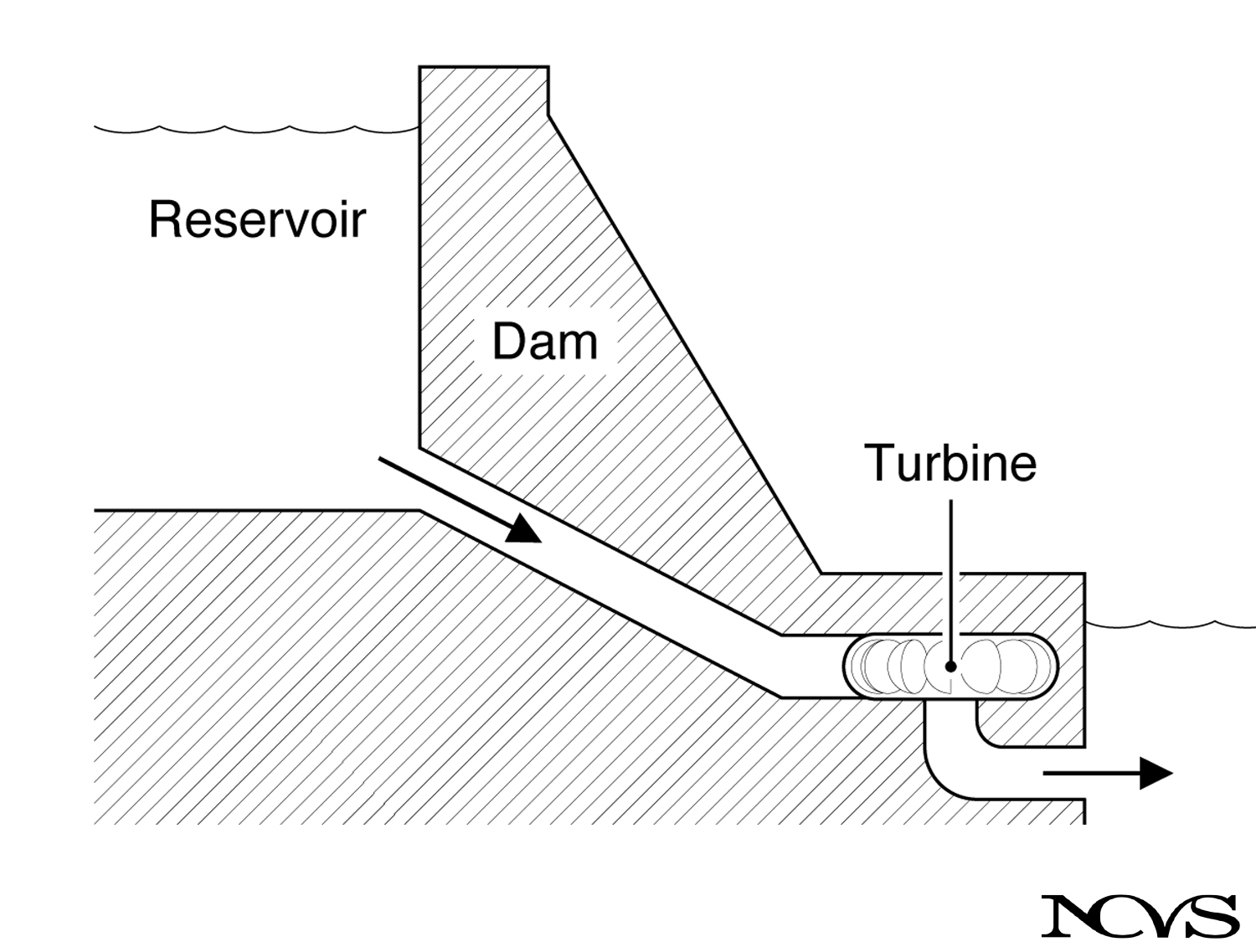 Figure 3.12: Diagram of a hydroelectric power plant for comparison with the aerodynamic plant of the pulmonary system.
The power available from the lungs can be likened to power from a hydroelectric plant. Both depend on two major variables:
Hydroelectric Plant
- Height of dam: Determines pressure at the bottom
- Flow through turbines: Volume of water per second
- Power: Product of pressure and flow
Engineers selecting dam sites consider:
- Total available flow from the stream
- Depth of canyon that can be dammed
- Ideal sites (like Colorado River canyons): Both ample height and flow
Pulmonary System
- Lung pressure: Analogous to dam height
- Airflow: Volume of air per second
- Power: Product of pressure and flow
Calculating Pulmonary Power
Quantitatively, the power available from both systems is given by:
𝒫 = PUwhere:
- 𝒫 is pulmonary power (watts)
- P is lung pressure relative to atmospheric (Pa or kPa)
- U is flow (m³/s or L/s)
Implications of the Formula
This equation reveals that for a given power level:
- Reduced flow can be compensated by increased pressure
- Reduced pressure can be compensated by increased flow
- Power regulation comes primarily from lung pressure during phonation
Range of Pulmonary Power
During phonation, variations occur across large ranges:
Lung pressure range: Factor of ~10
- Minimum: 0.3 kPa (soft speech)
- Maximum: 3.0 kPa (loud phonation)
Tidal flow range: Factor of ~5
- Varies with phrase length and vital capacity utilization
Combined power range: Factor of at least 100
- Actual value depends on phrase length
- More power available for short bursts than long segments
Numerical Example
Consider a phonatory duration of five seconds expelling half the vital capacity (2 liters = 0.002 m³) with lung pressure of 2.5 kPa:
𝒫 = (2.5 kPa)(2 L/5s)
  = (2,500 N/m²)(0.002 m³/5s)
  = 1 watt
This is an important reference value: Approximately 1 watt represents the maximum aerodynamic power a human can produce in speech.
Typical Values
- Soft conversational speech: 0.01-0.1 watts
- Normal conversational speech: 0.1-0.3 watts
- Loud speech: 0.3-0.6 watts
- Maximum phonation: ~1 watt
Power Conversion Efficiency
Not all aerodynamic power converts to acoustic power. The conversion process involves:
Energy Losses
-
Downstream kinetic energy: Some energy remains in the airstream after passing the glottis
-
Rotational flow: Vortices at glottal exit dissipate energy
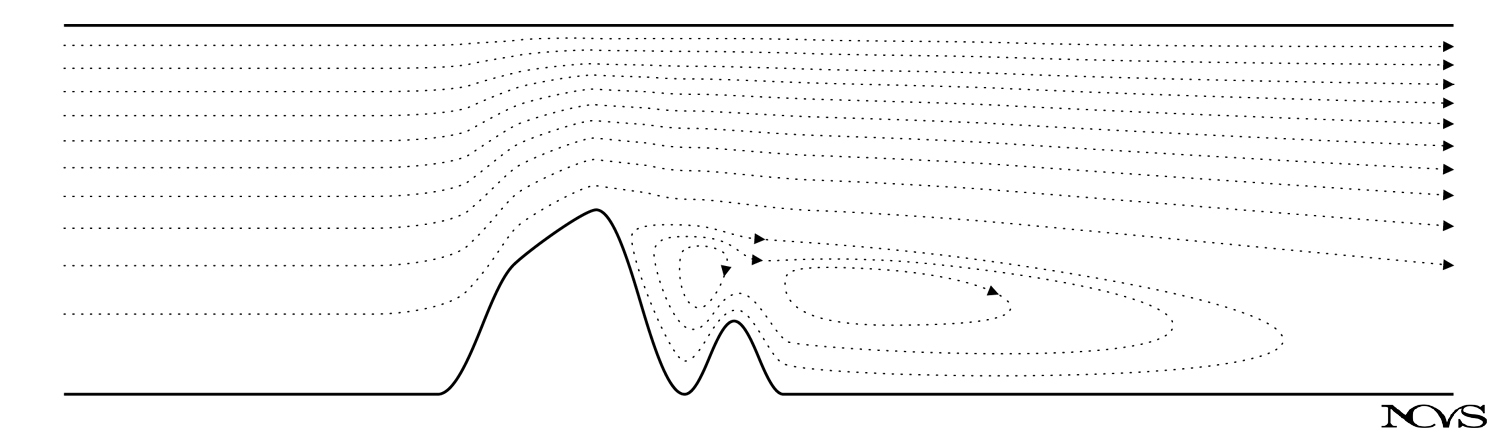 Figure 3.13: Computer simulation of flow lines for air particles passing over the true and false vocal folds.
-
Turbulence: “White water” effects further dissipate energy
-
Mechanical friction: Tissue vibration generates heat through internal friction
-
Tissue damping: Not all vibratory modes contribute to radiation
Typical Efficiency
The overall efficiency from aerodynamic to acoustic power is quite low:
- Approximately 0.1% to 1% for normal speech
- Maximum acoustic power output: ~0.001-0.01 watts
- Most aerodynamic power dissipates as heat and turbulence
This low efficiency is not a design flaw—voice production prioritizes:
- Fine acoustic control over raw efficiency
- Protection of delicate vocal fold tissue
- Dual function (breathing and phonation)
Practical Implications
For Voice Users
Understanding pulmonary power helps explain:
- Why lung pressure is crucial for intensity control
- Why phrase length affects sustainable loudness
- Why rest is needed after extended loud phonation
- Why efficient vocal technique matters for voice conservation
For Voice Training
Power considerations inform:
- Breath management strategies
- Intensity control exercises
- Vocal health practices
- Conditioning protocols
For Clinical Assessment
Power analysis aids:
- Aerodynamic assessment protocols
- Efficiency measurements
- Before/after treatment comparisons
- Functional capacity evaluation
Summary
Pulmonary power—the product of lung pressure and airflow—provides all physical power for voice production. Maximum human aerodynamic power in speech approximates 1 watt. While conversion to acoustic power is inefficient (~0.1-1%), this aerodynamic power is essential for phonation. Understanding power relationships clarifies the importance of breath management and pressure control in voice production.
Key Takeaways
- ✅ Pulmonary power = lung pressure × airflow, measured in watts
- ✅ Maximum aerodynamic power in speech is approximately 1 watt
- ✅ Lung pressure can vary by factor of 10, flow by factor of 5, giving power range of 100+
- ✅ Conversion to acoustic power is inefficient (~0.1-1%) but sufficient for communication
Related Topics
Further Reading
- Titze, I. R. (2000). Principles of voice production (2nd ed.). National Center for Voice and Speech.
- Bouhuys, A., Mead, J., Proctor, D. F., & Stevens, K. N. (1968). Pressure-flow events during singing. Annals of the New York Academy of Science, 155, 165-176.