Temporal Gap and Spectral Slope
The perceptual categorization of vocal registers relies on two distinct acoustic mechanisms that transform continuous physiological adjustments into discrete perceptual changes. Understanding temporal gap and spectral slope transitions provides the foundation for comprehending how listeners distinguish pulse, modal, and falsetto registers, and explains why these transitions occur at specific acoustic boundaries rather than gradually across the entire frequency range.
Overview of Two Transition Mechanisms
Register transitions arise from different acoustic properties that the auditory system uses to categorize voice quality.
Fundamental Distinction
The two mechanisms operate independently:
Temporal Gap Transitions
- Based on temporal resolution of the auditory system
- Sensitive to fundamental frequency relative to formant decay
- Primary mechanism for pulse-modal transition
- Crossover frequency approximately 70-80 Hz
- Related to detection of silence gaps between glottal pulses
- Involves auditory temporal processing capabilities
Spectral Slope Transitions
- Based on spectral energy distribution across harmonics
- Sensitive to high-frequency harmonic content
- Primary mechanism for modal-falsetto transition
- No single crossover frequency (varies with glottal configuration)
- Related to perception of “brightness” or “darkness”
- Involves spectral integration and pattern recognition
Acoustic Independence
The two mechanisms can operate independently:
- Temporal gap transitions can occur without spectral changes
- Spectral slope transitions can occur at any fundamental frequency
- Combined transitions possible at certain frequencies
- Different physiological control parameters
- Separate perceptual processing pathways
- Clinical and pedagogical implications distinct
Temporal Gap Transitions
The temporal gap mechanism depends on the relationship between fundamental frequency and the time course of acoustic energy decay.
Acoustic Basis
Formant Decay and F₀
The perception of temporal gaps depends on:
- Formant energy decays exponentially after glottal pulse
- Decay time constant determined by formant bandwidth
- Typical decay time: 20-30 ms for first formant
- If glottal period shorter than decay time: continuous sound
- If glottal period longer than decay time: perceptible gaps
- Crossover occurs around 70-80 Hz fundamental frequency
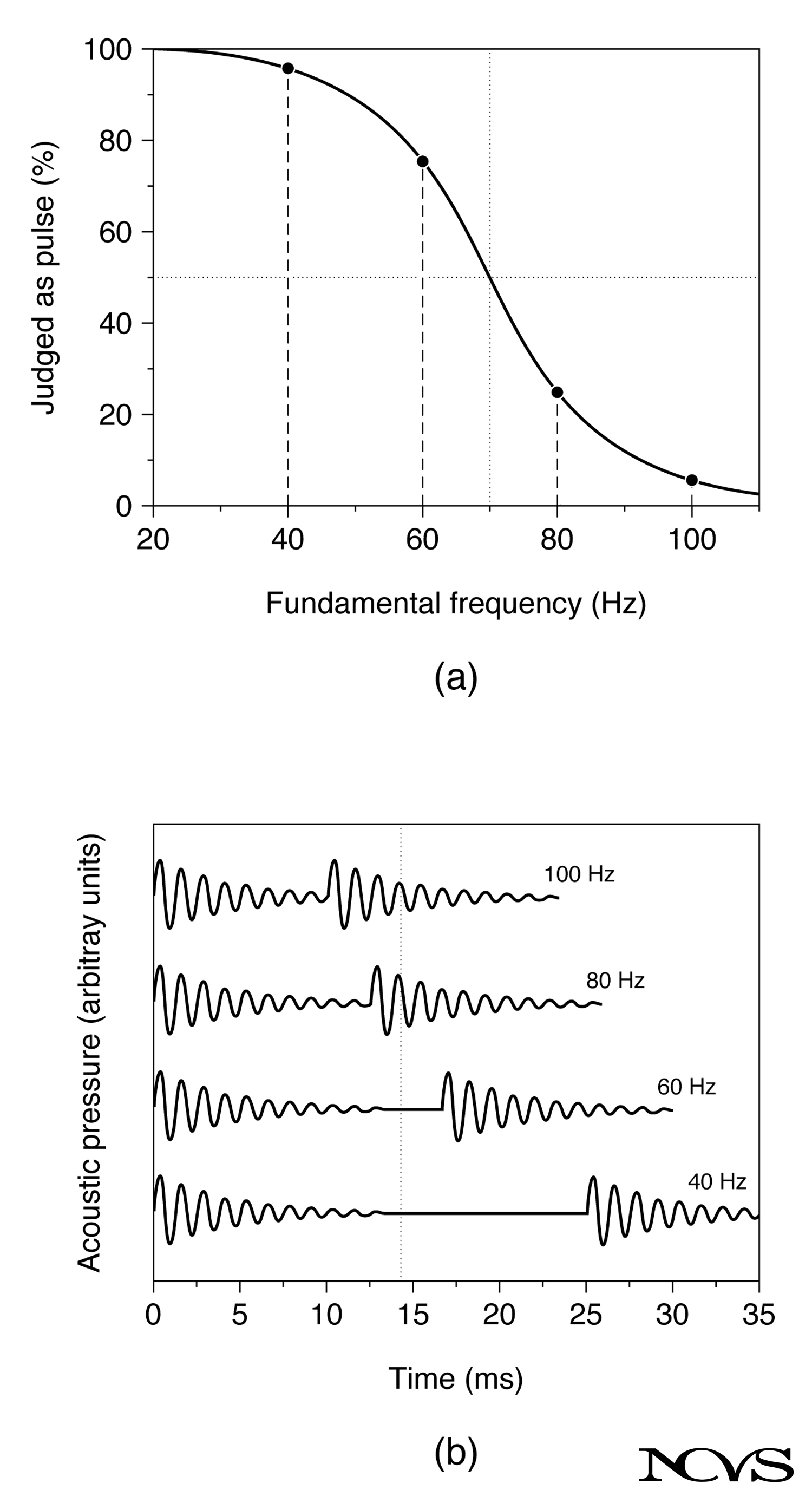 Figure 10.2: Illustration of temporal gap mechanism showing how formant decay creates perceptible silence periods between glottal pulses at low fundamental frequencies (pulse register) versus continuous sound perception at higher frequencies (modal register).
Mathematical Relationship
The critical relationship involves:
- Formant bandwidth (B) determines decay rate
- Time constant τ = 1/(πB)
- For F1 bandwidth ~100 Hz: τ ≈ 3.2 ms
- Sound decays to 10% amplitude in ~7.4 ms
- Perceivable gap requires ~10-15 ms of low energy
- Crossover frequency Fc ≈ 1/(decay time + gap threshold)
Open Quotient and Gap Perception
The temporal gap relates to the open quotient of vocal fold vibration.
Glottal Cycle Parameters
Open quotient influences perception:
- Open quotient (OQ) = open phase duration / total period
- Closed quotient (CQ) = 1 - OQ
- Lower F₀: longer period allows longer open phase
- Pulse register: extremely long open phase relative to period
- Modal register: open phase significant but shorter than decay time
- Relationship between OQ and perceived continuity
Critical Threshold
Gap perception threshold:
- Open phase must exceed formant decay time
- Additional silence period needed for gap perception
- Approximately 10-15 ms total low-energy duration
- Individual variation in perceptual threshold
- Training can sharpen categorical boundary
- Age and hearing loss affect threshold
Physiological Control
Control of temporal gap transitions involves specific laryngeal adjustments.
Low-Frequency Phonation
Pulse register characteristics:
- Very low fundamental frequency (30-80 Hz)
- Long glottal periods (12-33 ms)
- Extended closed phase
- Brief, abrupt opening
- Low amplitude vibration
- Minimal subglottal pressure
- Produces “creaky” or “fry” quality
Transition to Modal Register
Raising fundamental frequency:
- Increasing cricothyroid activity
- Vocal fold elongation and tensioning
- Reduced period duration
- Shorter open and closed phases
- Formant decay now comparable to or exceeds period
- Gaps no longer perceptible
- Abrupt perceptual shift to “normal” voice quality
Perceptual Consequences
Categorical Perception
Temporal gap transitions show classic categorical perception:
- Gradual F₀ increase through 60-80 Hz range
- Abrupt perceptual shift from pulse to modal
- Narrow transition region (few Hz)
- Identification function shows sharp boundary
- Discrimination peaks at category boundary
- Cross-linguistic consistency
Linguistic and Paralinguistic Functions
Temporal gap transitions serve communicative purposes:
- Phonological distinctions in some languages (e.g., Jalapa Mazatec)
- Paralinguistic signaling of emotion or attitude
- Turn-taking cues in conversation
- Vocal fry as sociolinguistic marker
- Pathological indicator when involuntary
- Age-related voice quality marker
Spectral Slope Transitions
The spectral slope mechanism depends on the distribution of energy across harmonic frequencies.
Acoustic Basis
Harmonic Energy Distribution
Spectral slope describes:
- Amplitude decrease across successive harmonics
- Measured in dB per octave (dB/oct)
- Steep slope: rapid energy decline (few harmonics)
- Shallow slope: gradual decline (many harmonics)
- Source spectral slope before vocal tract filtering
- Related to glottal flow waveform shape
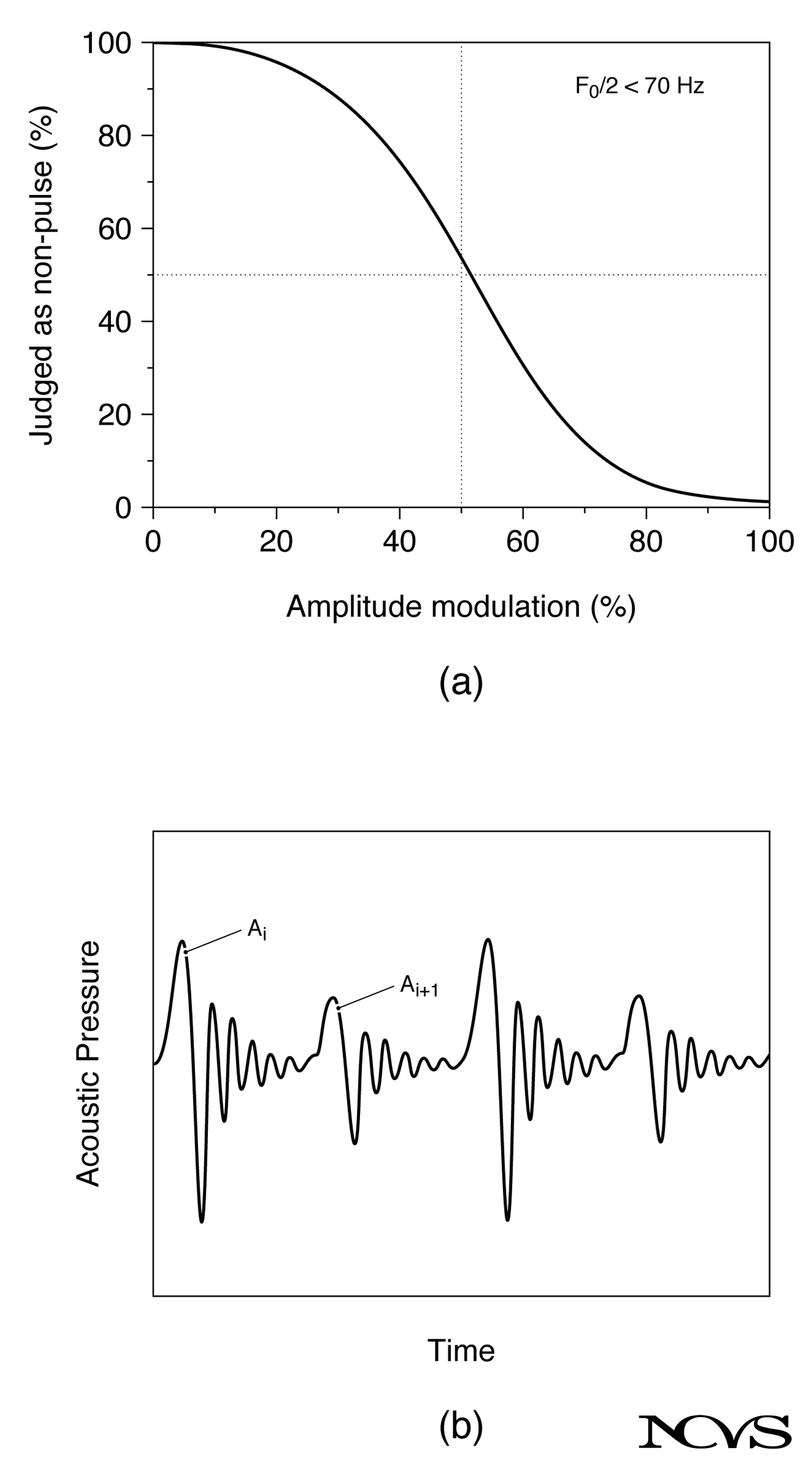 Figure 10.3: Comparison of source spectra for modal versus falsetto registers showing the difference in spectral slope (dB/octave) and high-frequency harmonic content that underlies perceptual distinction between registers.
Source-Filter Theory Application
Understanding spectral slope requires:
- Glottal source generates harmonics
- Source spectrum shape varies with glottal configuration
- Vocal tract filtering modifies spectrum
- Radiated spectrum = source × filter × radiation
- Register perception primarily driven by source changes
- Spectral slope measured at source, not radiated output
Glottal Configuration Effects
Vocal fold adduction dramatically affects spectral slope.
Modal Register Configuration
Complete glottal closure produces:
- Abrupt valve closure
- Sharp discontinuity in airflow
- Rich harmonic content
- Shallow spectral slope (-6 to -12 dB/oct for flow)
- Strong high-frequency energy
- “Bright” or “brassy” perceptual quality
- Involvement of thyroarytenoid muscle body
Falsetto Register Configuration
Incomplete closure or different vibratory mode:
- Sustained glottal gap (posterior or along entire length)
- Smoother airflow transitions
- Reduced harmonic content
- Steep spectral slope (-12 to -24 dB/oct or steeper)
- Weak high-frequency energy
- “Fluty” or “hooty” perceptual quality
- Reduced thyroarytenoid involvement, stretched cover
Abduction Quotient
The abduction quotient predicts spectral slope and register.
Definition and Measurement
Abduction quotient (AQ):
- AQ = (prephonatory glottal width) / (vibrational amplitude)
- Measured at inferior margin of vocal folds
- Higher AQ: greater relative separation
- Lower AQ: more complete closure
- Predicts spectral slope
- Correlates with perceived register
Relationship to Register
AQ thresholds:
- AQ < 0.3: modal register likely
- AQ > 0.5: falsetto register likely
- Intermediate values: transitional quality
- Individual variation exists
- Can be controlled voluntarily in trained singers
- Provides physiological basis for spectral transitions
Closed Quotient and Waveform Skewing
Additional glottal parameters affect spectral slope.
Closed Quotient Effects
Closed quotient influences spectrum:
- Higher CQ: more abrupt closure, richer harmonics
- Lower CQ: gentler transitions, fewer harmonics
- Independent of register to some degree
- Can modify spectral slope within a register
- Training can adjust CQ
- Interacts with fundamental frequency
Flow Waveform Asymmetry
Waveform shape matters:
- Symmetric flow: gradual spectral decline
- Right-skewed flow: enhanced high frequencies
- Skewing coefficient relates to closure abruptness
- Typical modal: significant right skew
- Typical falsetto: more symmetric
- Quantifiable through inverse filtering
Perceptual Processing of Spectral Slope
The auditory system extracts spectral slope information for register categorization.
Spectral Integration
Listeners integrate energy across frequency regions:
Frequency Weighting
Perception weighted toward:
- Mid-frequency region (500-2000 Hz) most informative
- High-frequency region (2000-5000 Hz) distinguishes registers
- Very low frequencies less informative for register
- Individual harmonics less important than overall slope
- Formant structure complicates spectral pattern
- Auditory system apparently “sees through” formant filtering
Critical Bandwidth and Slope Perception
Auditory critical bands affect spectral slope perception:
Integration Windows
Critical band considerations:
- Auditory system integrates energy within critical bands
- Bandwidth ~100 Hz at low frequencies, ~1000 Hz at high
- Multiple harmonics within each band
- Overall spectral envelope extracted
- Register perception based on envelope shape
- Training enhances spectral sensitivity
Categorical Boundary
Unlike temporal gap transitions, spectral slope shows:
Gradual Transition Region
Spectral slope transition characteristics:
- Less sharply defined boundary than temporal gap
- Wider transition region (several semitones)
- Greater individual variation in boundary location
- More amenable to voluntary control
- Training can shift boundary or widen ambiguous region
- “Mixed voice” exists in transition region
Interaction Between Mechanisms
Temporal gap and spectral slope mechanisms can interact.
Independent Control
Trained vocalists demonstrate:
- Pulse register possible with various spectral slopes
- Falsetto possible at very low F₀ (falsetto fry)
- Modal register maintainable across wide F₀ range
- Independent physiological control parameters
- Aesthetic choices determine which mechanism exploited
- Clinical disorders may affect one mechanism more than other
Combined Transitions
At certain frequencies both mechanisms may operate:
Natural Transition Zones
Potential interaction points:
- Around 200-300 Hz, multiple factors favor transition
- Physiological constraints become relevant
- Spectral and temporal factors may align
- Traditional “primo passaggio” region
- Enhanced perceptual salience when both mechanisms active
- Requires greatest skill to navigate smoothly
Register Ambiguity
Some vocal qualities defy simple categorization:
Mixed Voice Phenomenon
Intermediate qualities:
- Spectral slope intermediate between modal and falsetto
- Temporal characteristics clearly modal (continuous)
- Perceptual ambiguity or blended quality
- Deliberate cultivation in classical singing
- Achieved through partial thyroarytenoid activation
- Smooth transitions depend on this intermediate region
Clinical and Pedagogical Implications
Understanding these mechanisms informs voice training and therapy.
Assessment Tools
Measuring temporal and spectral characteristics:
Acoustic Analysis
Useful measures:
- Fundamental frequency tracking
- Spectral slope calculation (dB/octave)
- Open quotient estimation (from inverse filtering or EGG)
- Harmonic-to-noise ratio
- Spectrograms revealing harmonic structure
- Long-term average spectrum (LTAS)
Electroglottography
EGG provides complementary information:
- Contact quotient correlates with closed quotient
- Waveform shape indicates closure characteristics
- Register transitions evident in EGG waveform
- Non-invasive, real-time feedback
- Useful for pedagogy and therapy
- Correlates with perceptual register
Training Strategies
Different approaches for each mechanism:
Temporal Gap Control
Training pulse-modal transition:
- Gradual F₀ glides through transition region
- Awareness exercises for gap perception
- Control of low-frequency phonation
- Elimination of involuntary pulse register
- Voluntary pulse register for stylistic purposes
- Exercises focusing on smooth onset from pulse
Spectral Slope Control
Training modal-falsetto transition:
- Adduction exercises for modal register
- Lightening exercises for falsetto
- Mixed voice development in transition zone
- Formant tuning to complement spectral changes
- Registers blending through partial TA activation
- Style-appropriate register choices
Summary
Vocal register perception depends on two distinct acoustic mechanisms: temporal gap transitions and spectral slope transitions. Temporal gap transitions occur when the fundamental period becomes long enough relative to formant decay time that perceptible silence gaps appear between glottal pulses, typically around a crossover frequency of 70-80 Hz, creating the pulse-modal register boundary through auditory temporal resolution mechanisms that detect gaps of approximately 10-15 ms duration.
Spectral slope transitions result from changes in glottal configuration affecting the distribution of energy across harmonic frequencies, with complete closure producing shallow spectral slopes (-6 to -12 dB/octave) characteristic of modal register and incomplete closure or altered vibratory patterns producing steep slopes (-12 to -24 dB/octave or steeper) characteristic of falsetto register. The abduction quotient (prephonatory glottal width divided by vibrational amplitude) predicts spectral slope and register, with values below 0.3 favoring modal register and above 0.5 favoring falsetto.
These mechanisms operate through distinct perceptual pathways—temporal resolution for gap detection and spectral integration for slope perception—allowing independent physiological control and enabling phenomena such as falsetto fry (falsetto at very low F₀) and mixed voice (intermediate spectral characteristics at modal frequencies). The temporal gap transition shows sharp categorical boundaries typical of categorical perception, while spectral slope transitions exhibit wider transition regions with greater individual variation and voluntary control. Clinical assessment employs acoustic measures (spectral slope, open quotient, LTAS) and electroglottography, while training strategies target specific mechanisms through F₀ glides for temporal transitions and adduction exercises for spectral control.
Key Takeaways
- ✅ Two independent mechanisms underlie register perception: temporal gap (pulse-modal) and spectral slope (modal-falsetto)
- ✅ Temporal gap transitions occur around 70-80 Hz when glottal period exceeds formant decay time plus gap threshold (~10-15 ms)
- ✅ Spectral slope measures harmonic energy distribution: shallow (-6 to -12 dB/oct) for modal, steep (-12 to -24 dB/oct) for falsetto
- ✅ Abduction quotient (prephonatory width/vibrational amplitude) predicts register: <0.3 modal, >0.5 falsetto
- ✅ Temporal transitions show sharp categorical boundaries; spectral transitions show wider, more controllable regions
- ✅ Mechanisms operate independently: falsetto possible at low F₀, pulse register with varied spectral slopes
- ✅ Mixed voice represents intermediate spectral characteristics maintained through partial thyroarytenoid activation
- ✅ Assessment uses acoustic analysis (spectral slope, open quotient) and EGG; training targets specific mechanisms
Related Topics
- Perception of Vocal Registers
- The Pulse-Modal Transition
- The Modal-Falsetto Transition
- Glottal Source Function
- Spectral Slope
Further Reading
- Titze, I. R. (1989). On the relation between subglottal pressure and fundamental frequency in phonation. Journal of the Acoustical Society of America, 85(2), 901-906.
- Hollien, H., & Michel, J. (1968). Vocal fry as a phonational register. Journal of Speech and Hearing Research, 11(3), 600-604.
- Roubeau, B., Chevrie-Muller, C., & Saint Guily, J. L. (1987). Electromyographic activity of strap and cricothyroid muscles in pitch change. Acta Oto-Laryngologica, 104(5-6), 520-528.
- Sundberg, J., & Högset, C. (2001). Voice source differences between falsetto and modal registers in counter tenors, tenors and baritones. Logopedics Phoniatrics Vocology, 26(1), 26-36.
- Henrich, N., d’Alessandro, C., Castellengo, M., & Doval, B. (2005). Glottal open quotient in singing: Measurements and correlation with laryngeal mechanisms, vocal intensity, and fundamental frequency. Journal of the Acoustical Society of America, 117(3), 1417-1430.