Bifurcations and Chaos
Beyond the small perturbations of Type 1 signals lies a domain where conventional acoustic analysis largely fails: signals whose oscillation has changed qualitatively through nonlinear dynamical instabilities. In Titze’s (1995) classification, subharmonics, period doubling, biphonation and other bifurcations make a signal Type 2, while a signal with no apparent periodic structure—deterministic chaos, or something indistinguishable from it—is Type 3. These phenomena reflect qualitative changes in vocal fold oscillatory patterns rather than merely quantitative increases in perturbation. Understanding these nonlinear phenomena requires concepts from dynamical systems theory and recognition that the voice production system, like many biological oscillators, can transition between distinct behavioral regimes through bifurcations—sudden qualitative changes as control parameters vary.
Nonlinear Dynamics in Voice Production
The vocal fold oscillatory system exhibits inherent nonlinearity—output does not scale linearly with input, and the system’s behavior depends on its current state in complex ways.
Sources of Nonlinearity
Collision dynamics: Vocal folds collide and separate each cycle, a fundamentally nonlinear contact process. The collision forces depend nonlinearly on displacement and velocity.
Aerodynamic forces: The relationship between glottal opening and airflow involves nonlinear fluid dynamics. The Bernoulli effect, flow separation, and turbulence all contribute nonlinearity.
Tissue properties: Vocal fold tissue exhibits nonlinear stress-strain relationships (viscoelasticity), with stiffness depending on deformation magnitude and rate.
Coupling: Multiple coupled oscillators (left and right vocal folds, different tissue layers) can synchronize, desynchronize, or exhibit complex phase relationships.
These nonlinearities remain inconsequential during stable, regular phonation (Type 1). However, under certain conditions—pathological tissue changes, extreme pitch or loudness, asymmetric vocal fold properties—nonlinear effects dominate, producing qualitatively different behaviors.
Control Parameters and State Space
In dynamical systems terminology, control parameters are quantities that can be varied to affect system behavior (subglottal pressure, vocal fold tension, asymmetry degree). State variables describe the system’s instantaneous condition (vocal fold position, velocity). The system evolves through state space according to equations of motion.
For the voice, relevant control parameters include:
- Subglottal pressure
- Vocal fold longitudinal tension
- Vocal fold adduction
- Left-right asymmetry in mass, stiffness, or tension
- Vocal tract acoustic loading
As control parameters vary, the system may transition between different dynamical regimes through bifurcations.
Period Doubling and Subharmonics
The most commonly observed nonlinear phenomenon in voice is period doubling or subharmonic generation, where the oscillatory pattern repeats every two (or more) fundamental periods rather than every single period.
Mechanism of Period Doubling
Period doubling occurs when the two vocal folds, though synchronized, oscillate with alternating amplitudes. Even-numbered cycles differ systematically from odd-numbered cycles, creating a pattern that repeats only after two cycles.
This can arise from:
- Asymmetric stiffness or mass: One fold slightly heavier or stiffer than the other
- Asymmetric tension: Unequal activation of thyroarytenoid or cricothyroid muscles
- Asymmetric positioning: Vocal folds not perfectly aligned
- Nonlinear coupling: The collision dynamics couple the folds in ways that favor alternating patterns
Mild asymmetries may be compensated at normal pitch and loudness, but become problematic at extremes where the nonlinear dynamics amplify small differences.
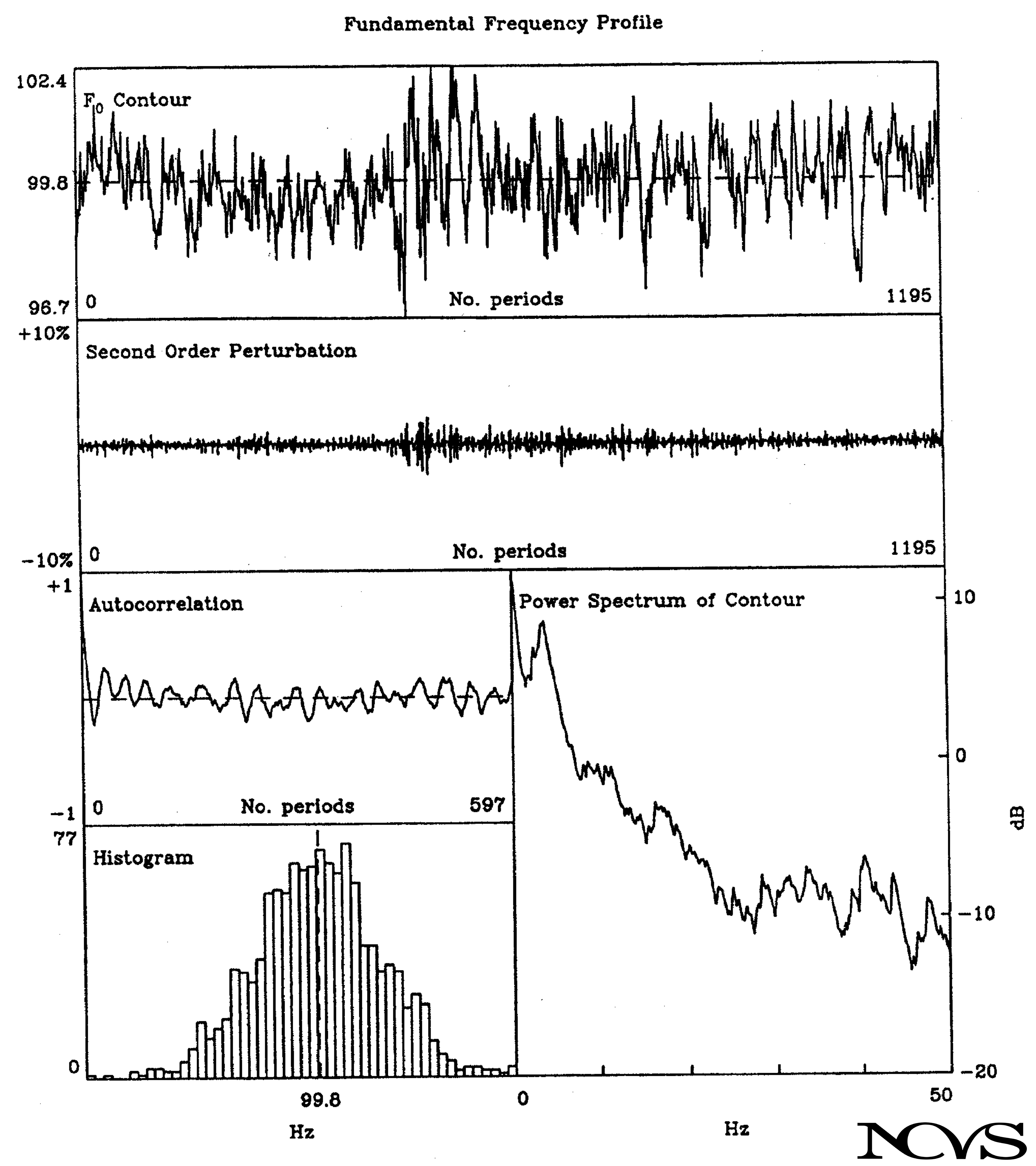 Figure 11.13: Visualization of bifurcations in vocal fold oscillation showing period-1 (normal), period-2 (subharmonic), and chaotic regimes as control parameters change. The transition through bifurcations demonstrates sudden qualitative shifts in oscillatory behavior.
Acoustic Manifestations
Period doubling manifests acoustically as subharmonics—spectral components at half the fundamental frequency (F₀/2) and potentially quarter frequency (F₀/4), eighth (F₀/8), etc., in a cascade.
A voice normally phonating at 200 Hz showing period-2 oscillation would have:
- Components at 100 Hz (the actual repetition rate)
- Components at 200 Hz (the attempted fundamental)
- Harmonics of both (300, 400, 500 Hz…)
Perceptually, this creates:
- Roughness: The irregular waveform pattern sounds rough or harsh
- Pitch ambiguity: Listeners may perceive the lower subharmonic as the pitch
- Register confusion: The voice may sound between chest and falsetto
Clinical terms for audible period doubling include diplophonia (two perceived pitches) and roughness or grating quality.
Period-Doubling Cascade
Dynamical systems theory predicts that period doubling can cascade: as a control parameter changes progressively, the system may transition from period-1 → period-2 → period-4 → period-8 → chaos. Each transition occurs at smaller parameter intervals, following universal mathematical patterns (Feigenbaum constants).
In voice, complete cascades are rare but period-2 and occasionally period-4 patterns occur, particularly:
- At very low pitch (vocal fry region)
- During transitions between registers
- In voices with substantial left-right asymmetry
- In certain pathological conditions
Diplophonia and Biphonation
Diplophonia (literally “double voice”) describes the perception of two simultaneous pitches. Biphonation refers to the production mechanism generating this percept. While related, these terms address different domains—perceptual versus acoustic/physiological.
Types of Diplophonia
Harmonic diplophonia: One perceived pitch is an exact octave or other harmonic interval of the other. This typically arises from period doubling or prominent harmonics being mistaken for fundamentals.
Nonharmonic diplophonia: The two perceived pitches maintain no simple frequency ratio. This suggests independent oscillation of the two vocal folds at different frequencies.
Intermittent diplophonia: The second pitch appears sporadically rather than continuously, often during specific phonatory conditions (particular pitches, loudness levels, or during transients).
Physiological Mechanisms
Multiple mechanisms can produce diplophonia:
Asymmetric oscillation: Left and right folds oscillate at slightly different frequencies due to asymmetric mass, tension, or stiffness. If the asymmetry is too large for synchronization (entrainment), each fold maintains its own frequency, producing two fundamental frequencies simultaneously.
Different vibratory modes: One fold may vibrate in a different mode (thicker or thinner edge predominating) than the other, generating different frequencies.
Vertical phase differences: The vocal folds vibrate in multiple layers (cover, transition, body). Normally these couple coherently, but desynchronization can produce multiple frequency components.
Ventricular fold oscillation: The false vocal folds (ventricular folds) above the true vocal folds can oscillate independently, adding a low-frequency component (typically 50-100 Hz).
Clinical Significance
Diplophonia commonly accompanies:
- Vocal fold paralysis: Paralyzed fold fixed in position while mobile fold vibrates alone or both vibrate asynchronously
- Vocal fold lesions: Mass lesions (nodules, polyps, cysts) create asymmetry
- Tension imbalance: Unequal muscle activation from neuromuscular disorders or poor technique
- Register transitions: Temporary biphonation during chest-falsetto transitions
While sometimes encountered briefly in normal voices during specific tasks, persistent diplophonia warrants clinical evaluation.
Deterministic Chaos
Chaos in the technical sense describes deterministic systems exhibiting aperiodic behavior that appears random but arises from nonlinear dynamics rather than external noise.
Characteristics of Chaos
Chaotic systems exhibit:
Sensitive dependence on initial conditions: Tiny differences in starting conditions lead to rapidly diverging trajectories (the “butterfly effect”) Aperiodicity: The system never exactly repeats its pattern Deterministic: The behavior follows deterministic equations without random forcing Boundedness: Despite aperiodicity, the system remains in a bounded region of state space Fractal structure: The system’s trajectory in state space forms a fractal strange attractor
Chaos in Voice
Evidence for chaotic voice production remains debated but certain findings suggest chaos occurs in some severely disordered voices:
Aperiodic waveforms with structure: Severely rough voices sometimes show waveform patterns that appear neither random noise nor periodic oscillation Correlation dimension analysis: Mathematical analysis of some disordered voices yields fractal dimensions between integers, suggesting strange attractor dynamics Predictability analysis: Short-term predictability with long-term unpredictability characterizes some voice signals, consistent with chaos
However, distinguishing true deterministic chaos from:
- Noisy periodic oscillation (Type 1 with large perturbation)
- Subharmonic or strongly modulated oscillation (Type 2)
- Nonstationarity (trends, transients)
- Stochastic aperiodicity (random noise, as in Type 4 aphonic signals)
requires sophisticated analysis and long, clean recordings rarely available in clinical settings.
Routes to Chaos
Theoretical and experimental work identifies several routes to chaos in oscillatory systems:
Period-doubling cascade: Period-1 → period-2 → period-4 → period-8 → chaos, as discussed above
Quasiperiodicity: Two incommensurate frequencies (no integer ratio) create complex patterns that may transition to chaos
Intermittency: Alternation between periodic and chaotic intervals, with the chaotic fraction increasing until fully chaotic
Crisis: Sudden transition from periodic to chaotic as a parameter crosses a critical threshold
Evidence exists for period-doubling routes in voice, particularly in computational models. Other routes remain less clearly demonstrated.
Vocal Fry and Low-Frequency Nonlinearities
Vocal fry (pulse register, glottal fry) represents the lowest vocal register, characterized by:
- Very low fundamental frequency (20-80 Hz)
- Irregular, popping quality
- Relaxed, thick vocal fold configuration
- Low airflow
Vocal fry exhibits various nonlinear phenomena including period doubling, subharmonics, and irregular pulsing.
Mechanisms
Vocal fry occurs when:
- Longitudinal tension is very low (relaxed cricothyroid)
- Vocal folds are short and thick
- Subglottal pressure is low (3-5 cm H₂O)
- The oscillation depends more on collision mechanics than aerodynamic forces
The collision-dominated dynamics introduce strong nonlinearities. The folds may stick together, requiring pressure buildup before separation. The opening phase may be brief and abrupt. The closing may involve multiple contacts or incomplete closure.
These irregular dynamics produce the characteristic vocal fry sound and acoustic patterns including:
- Irregular period sequences
- Period doubling (alternating longer and shorter periods)
- Occasional missing cycles
- Low harmonics-to-noise ratio
Bifurcations in Vocal Fry
Vocal fry exhibits bifurcation phenomena as parameters vary:
Increasing subglottal pressure or tension may cause transitions: Fry → period-doubled fry → modal register
The transition from fry to modal register often shows hysteresis—the transition pressure differs depending on whether pressure is increasing or decreasing, indicating bistability where both regimes can exist at certain parameter values.
Limits of Perturbation Analysis
Bifurcations (Type 2) and chaos (Type 3) invalidate conventional perturbation analysis assumptions more fundamentally than ordinary nonstationarity does.
Why Conventional Analysis Fails
No clear fundamental period: Period doubling creates ambiguity—is the period T or 2T? Chaos eliminates periodicity entirely.
Diverging perturbation measures: Jitter and shimmer computed on period-doubled signals exceed 10-20%, well beyond meaningful interpretation.
Algorithm confusion: Pitch tracking algorithms may lock onto subharmonics, alternate between frequency components, or fail completely.
Meaningless averages: Computing “mean period” for a chaotic signal produces an arbitrary value depending on analysis window selection.
Alternative Analysis Approaches
For Type 2 and Type 3 signals, appropriate analysis includes:
Visual/auditory assessment: Expert perceptual evaluation remains crucial Spectrography: Time-frequency displays reveal subharmonic structure, modulation patterns Nonlinear dynamics measures: Correlation dimension, Lyapunov exponents, entropy (though requiring long clean recordings) Phase plane analysis: Plotting vocal fold velocity versus position reveals attractor structure Computational modeling: Comparing observed patterns to model predictions guides interpretation
Clinical practice often relies on perceptual assessment supplemented by spectrographic visualization rather than attempting quantitative metrics.
Clinical and Pathological Implications
Nonlinear phenomena in voice carry important clinical implications.
Indicators of Pathology
Prominent nonlinear behavior often indicates:
- Structural asymmetry: Unilateral lesions, paralysis, scar
- Neuromuscular imbalance: Unequal innervation, spasmodic dysphonia
- Tissue property changes: Stiffness asymmetry from scarring or edema
- Biomechanical instability: Operating near phonation threshold, inadequate closure
The presence of diplophonia or clear subharmonics warrants investigation for underlying pathology.
Therapeutic Implications
Treatment approaches for nonlinear instabilities include:
Surgical: Removing lesions creating asymmetry, medialization of paralyzed fold Medical: Treating underlying neurological conditions, reducing inflammation Behavioral: Voice therapy targeting symmetric muscle activation, optimizing vocal fold closure Compensation: Teaching strategies to avoid parameter ranges producing bifurcations
Understanding the nonlinear nature guides treatment—the goal becomes shifting control parameters to stabilize the period-1 regime rather than simply “reducing perturbation.”
Prognostic Significance
The specific nonlinear pattern may predict treatment outcome:
- Simple period doubling may resolve more readily than chaos
- Intermittent diplophonia may respond to voice therapy
- Persistent chaotic oscillation may indicate structural changes requiring surgery
Computational Modeling Insights
Computational models of vocal fold oscillation illuminate nonlinear phenomena by enabling systematic parameter variation and observation of resulting dynamics.
Model Predictions
Two-mass models and more complex finite element models predict:
- Bifurcation sequences as pressure or asymmetry increases
- Hysteresis phenomena where history affects current behavior
- Critical parameter values for transitions between regimes
- The possibility of coexisting attractors (multistability)
These predictions guide experimental investigation and clinical interpretation.
Model Validation
Comparing model predictions to observed voice signals tests model validity and refines understanding. When models accurately reproduce observed bifurcation patterns, confidence increases that the modeled mechanisms reflect actual physiology.
Summary
Nonlinear dynamics in voice production give rise to bifurcations—period doubling, subharmonics, diplophonia—that define Type 2 signals, and potentially to deterministic chaos, the hallmark of Type 3 signals. These phenomena reflect qualitative changes in oscillatory patterns arising from inherent nonlinearities in collision dynamics, aerodynamics, tissue properties, and vocal fold coupling. Period doubling creates subharmonics at F₀/2, F₀/4, etc., arising from asymmetric vocal fold oscillation patterns. Diplophonia involves perception of two simultaneous pitches from asynchronous fold oscillation, different vibratory modes, or ventricular fold involvement.
Deterministic chaos, characterized by aperiodicity despite deterministic dynamics and strange attractor structure, may occur in severely disordered voices though definitive identification proves challenging. Vocal fry exhibits various nonlinear phenomena including irregular pulsing and period doubling, with bifurcations governing transitions to modal register. Conventional perturbation analysis fails fundamentally for Type 2 and Type 3 signals, requiring alternative approaches including spectrograp
hic analysis, nonlinear dynamics measures, and expert perceptual assessment.
Clinically, prominent nonlinear phenomena often indicate structural asymmetry, neuromuscular imbalance, or biomechanical instability. Treatment targets shifting control parameters to stabilize periodic oscillation rather than merely reducing perturbation. Computational modeling provides insights into bifurcation sequences and guides interpretation of observed patterns. Understanding nonlinear dynamics enriches both theoretical knowledge of voice production and practical clinical assessment of complex voice disorders.
Key Takeaways
- ✅ Bifurcations such as period doubling and subharmonics define Type 2 signals; fundamentally aperiodic (chaotic) signals are Type 3
- ✅ Period doubling creates subharmonics at F₀/2, F₀/4 from alternating-pattern oscillation, often arising from vocal fold asymmetry
- ✅ Diplophonia involves perception of two simultaneous pitches from asynchronous vocal fold oscillation or independent frequency components
- ✅ Deterministic chaos shows aperiodic behavior from nonlinear dynamics rather than random noise, characterized by strange attractors
- ✅ Vocal fry exhibits nonlinear phenomena including irregular pulsing, period doubling, and bifurcations to modal register
- ✅ Conventional perturbation analysis fails for Type 2 and Type 3 signals; appropriate analysis uses spectrography, nonlinear measures, and perceptual assessment
- ✅ Prominent nonlinear behavior indicates structural asymmetry, neuromuscular imbalance, or biomechanical instability warranting clinical investigation
- ✅ Computational models predict bifurcation sequences and guide interpretation of observed nonlinear vocal phenomena
Related Topics
- Signals with Small Perturbations
- Nonstationarity and Trends
- Biomechanical Sources
- Neurological Sources
Further Reading
- Titze, I. R., Baken, R., & Herzel, H. (1993). Evidence of chaos in vocal fold vibration. In I. R. Titze (Ed.), Vocal fold physiology: Frontiers in basic science (pp. 143-188). San Diego, CA: Singular Publishing Group.
- Herzel, H., Berry, D., Titze, I. R., & Saleh, M. (1994). Analysis of vocal disorders with methods from nonlinear dynamics. Journal of Speech and Hearing Research, 37(5), 1008-1019.
- Steinecke, I., & Herzel, H. (1995). Bifurcations in an asymmetric vocal-fold model. Journal of the Acoustical Society of America, 97(3), 1874-1884.
- Zhang, Z., Mongeau, L., & Frankel, S. H. (2002). Experimental verification of the quasi-steady approximation for aerodynamic sound generation by pulsating jets in tubes. Journal of the Acoustical Society of America, 112(4), 1652-1663.