Neurological Sources
The neural control system governing voice production introduces multiple sources of variability and perturbation. From the stochastic firing patterns of individual motor neurons to the complex coordination of respiratory-laryngeal-articulatory subsystems, neural mechanisms both enable precise voice control and impose fundamental limits on stability. Understanding these neurological sources proves essential for distinguishing normal from pathological voice function and for interpreting acoustic measurements in clinical contexts.
Motor Unit Recruitment Variability
The fundamental unit of neural control is the motor unit—a single alpha motor neuron and all the muscle fibers it innervates. Voice production requires coordinated recruitment of hundreds of motor units across multiple muscles, each contributing to the overall muscular force and tension patterns that govern phonation.
Stochastic Motor Neuron Firing
Individual motor neurons do not fire with perfect regularity. The intervals between action potentials exhibit variability arising from multiple sources: ion channel noise at the cellular level, synaptic input fluctuations from upstream neurons, and intrinsic membrane potential oscillations. This neural noise represents irreducible biological randomness rather than measurement error or external interference.
For a motor unit firing at 10 Hz (typical for postural muscles including intrinsic laryngeals during sustained phonation), the coefficient of variation for interspike intervals typically ranges from 10-30%. This translates to millisecond-scale variations in when individual muscle fibers receive activation signals, producing subtle fluctuations in muscle force output.
Temporal Summation and Smoothing
While individual motor units fire irregularly, the combined output of many units produces more stable force. Temporal summation occurs as overlapping twitches from different motor units blend together, smoothing the force profile. Additionally, the mechanical properties of muscle tissue—viscoelasticity, mass, and compliance—act as low-pass filters that attenuate high-frequency neural fluctuations.
The vocal folds contain relatively small muscles with fewer motor units per muscle compared to large limb muscles. This reduced redundancy may limit the smoothing achieved through temporal summation, potentially making laryngeal muscles more susceptible to neural noise effects on voice stability.
Recruitment Pattern Variability
Beyond individual motor unit firing, the recruitment pattern—which motor units are active and at what rates—varies from moment to moment. The Henneman size principle dictates orderly recruitment, with smaller motor units activated before larger ones as force requirements increase. However, the exact threshold forces at which specific units recruit show variability, and decruitment during sustained contractions occurs somewhat randomly as individual units fatigue at different rates.
This recruitment variability manifests in subtle force fluctuations during sustained muscle contraction, contributing to period-to-period variations in vocal fold tension, stiffness, and oscillation characteristics. The cumulative effect of hundreds of motor units across cricothyroid, thyroarytenoid, and other laryngeal muscles creates a complex landscape of tension variations underlying acoustic perturbations.
Neural Noise in Motor Commands
Beyond motor unit firing patterns, variability exists in the descending motor commands from cortical and subcortical control centers. The motor cortex, basal ganglia, cerebellum, and brainstem nuclei all contribute to voice motor planning and execution, each introducing characteristic variability patterns.
Central Pattern Generators
Rhythmic motor behaviors often rely on central pattern generators (CPGs)—neural circuits capable of producing patterned output without sensory feedback. While respiratory rhythm clearly involves brainstem CPGs, the extent to which laryngeal control employs such mechanisms remains debated. If present, laryngeal CPGs would exhibit intrinsic variability in their oscillatory period and amplitude, potentially contributing to observable voice perturbations.
Cortical Control Variability
Volitional voice control engages motor cortex, with learned vocal behaviors (speech, singing) requiring extensive cortical processing. Cortical neurons exhibit trial-to-trial variability in responses to ostensibly identical stimuli, reflecting noise in neural computation. This variability propagates through the motor control hierarchy, ultimately affecting the precise timing and magnitude of muscle activations.
For highly practiced vocal tasks, motor programs become more stereotyped and less variable through motor learning, though complete elimination of variability never occurs. The residual variability in expert performers represents the irreducible limit of neural control precision given biological constraints.
Reflexive Feedback Loops
Voice production involves multiple sensory-motor feedback loops operating at different timescales. These reflexes stabilize phonation against perturbations but also introduce their own sources of variability.
Auditory Feedback
The auditory system monitors vocal output, detecting deviations from intended targets. Auditory feedback loops operate with latencies around 100-150 ms, sufficient for within-utterance corrections but too slow for cycle-to-cycle perturbation compensation. Variability in auditory perception and in the motor responses to perceived errors contributes to longer-timescale fluctuations.
Delayed auditory feedback experiments demonstrate the importance of this loop: when speakers hear their voice delayed by 50-200 ms, they experience severe fluency disruptions, demonstrating the system’s reliance on feedback timing. Natural variability in auditory processing latencies may contribute to phonation instability, particularly during vocal learning or in unfamiliar acoustic environments.
Proprioceptive and Tactile Feedback
Mechanoreceptors in laryngeal tissues, joints, and respiratory muscles provide proprioceptive and tactile information about vocal fold position, contact, tissue stretch, and subglottal pressure. These proprioceptive loops operate at shorter latencies (20-50 ms) than auditory feedback, enabling more rapid corrections.
However, proprioceptive feedback itself exhibits variability. Receptor adaptation, variable neural encoding, and central processing noise all contribute to imperfect tissue state representations. Additionally, the motor responses to proprioceptive signals show variability, as central nervous system interpretation of sensory input and generation of appropriate motor commands involve noisy neural computation.
Reflexive Laryngeal Responses
Several stereotyped laryngeal reflexes protect the airway and stabilize phonation. The glottal closure reflex rapidly adducts vocal folds in response to noxious stimuli. The laryngeal chemoreflex responds to liquid or chemical irritants. While these reflexes typically remain subthreshold during normal phonation, low-level reflexive activity may contribute to background variability in laryngeal muscle tone and vocal fold positioning.
Respiratory-Laryngeal Coordination
Phonation requires precise coordination between respiratory and laryngeal subsystems. The respiratory muscles generate subglottal pressure, while laryngeal muscles adjust glottal resistance. Variability in either subsystem or in their coordination contributes to voice perturbations.
Respiratory Control Noise
The respiratory control system exhibits multiple sources of variability:
- Phrenic nerve firing variability translates directly to diaphragm activation variability
- Intercostal muscle coordination requires orchestrating dozens of muscles, each with motor unit variability
- Central respiratory rhythm variability reflects the intrinsic properties of brainstem respiratory centers
- Lung mechanics variability from variable compliance, airway resistance, and lung volume
These sources combine to produce subglottal pressure fluctuations even during attempts to maintain steady expiratory flow. Typical pressure variability during sustained phonation ranges from 2-5% of mean pressure, with greater variability at extreme pitch or loudness.
Laryngeal-Respiratory Coupling
Effective phonation requires laryngeal adjustments that track respiratory pressure changes. When subglottal pressure increases, laryngeal resistance must increase proportionally to maintain constant airflow and stable oscillation. This compensatory coupling involves both reflexive and voluntary mechanisms, each exhibiting characteristic variability.
Delays in sensory detection of pressure changes and in motor responses create phase lags between pressure fluctuations and laryngeal adjustments. These delays, combined with the variability in both respiratory and laryngeal systems, produce complex interaction patterns that contribute to fundamental frequency and amplitude perturbations.
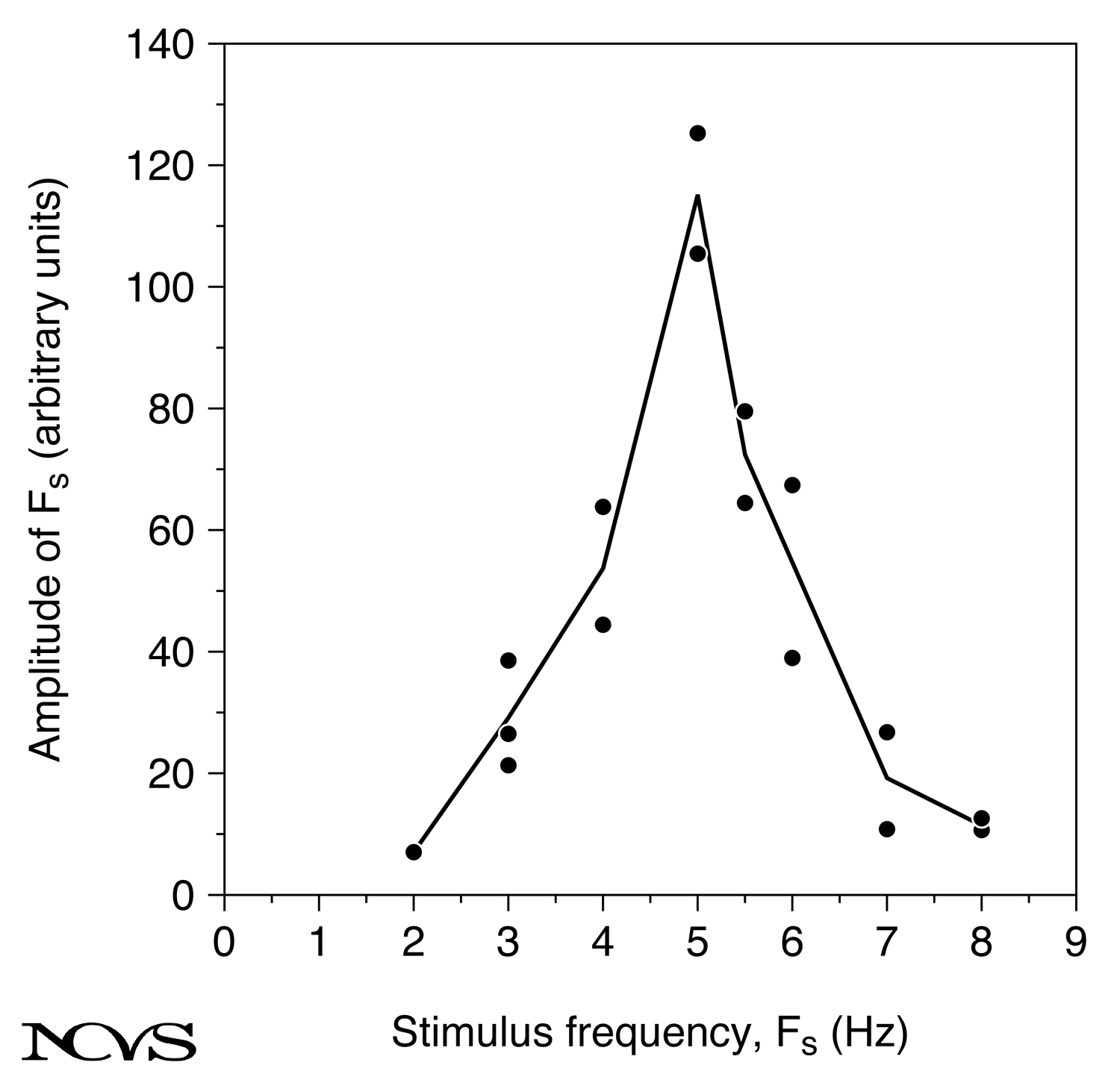 Figure 11.8: Spectrogram showing voice tremor at approximately 5-6 Hz, visualized as regular modulation patterns in both fundamental frequency and formant structure.
Tremor
Tremor represents rhythmic, involuntary oscillations of body parts resulting from neural oscillator activity. Voice tremor manifests as regular modulation of fundamental frequency, amplitude, or both, typically at rates of 4-8 Hz. Unlike random perturbations, tremor shows spectral peaks at the tremor frequency and its harmonics.
Essential Tremor
Essential tremor is among the most common movement disorders, affecting up to 5% of adults over age 65. While classically associated with hand tremor, essential tremor frequently involves laryngeal muscles, producing voice tremor that patients describe as voice “shaking” or “quivering.”
Voice tremor from essential tremor typically shows:
- Regular frequency modulation at 4-7 Hz
- Amplitude modulation often accompanying FM
- Worsening with stress or fatigue
- Potential improvement with alcohol consumption (though not recommended therapeutically)
- Progressive nature, worsening with age
The neural mechanisms involve abnormal oscillatory activity in cerebello-thalamo-cortical circuits. The cerebellum’s role in motor timing and coordination becomes disrupted, producing rhythmic output that propagates through motor pathways to affect muscle activation patterns.
Neurological Disease Effects
Multiple neurological conditions affect voice through various mechanisms:
Parkinson’s Disease: Characterized by reduced vocal loudness (hypophonia), monotone pitch, and sometimes tremor. The basal ganglia dysfunction underlying Parkinson’s impairs motor planning and execution, reducing movement amplitude and increasing rigidity. Voice perturbations increase due to reduced vocal fold closure force and irregular oscillation from increased tissue stiffness.
Cerebellar Disorders: The cerebellum coordinates timing and force of movement. Cerebellar dysfunction produces ataxic dysarthria with irregular articulatory breakdowns, scanning speech patterns, and voice tremor or irregular phonation. Perturbations increase due to impaired timing control of respiratory-laryngeal coordination.
Multiple Sclerosis: Demyelination of motor pathways produces variable voice symptoms depending on lesion locations. Common manifestations include reduced vocal control, increased perturbations, and tremor-like instabilities. The heterogeneity of lesion patterns creates highly variable voice presentations.
Amyotrophic Lateral Sclerosis (ALS): Motor neuron degeneration affects both bulbar (speech/swallowing) and respiratory muscles. Voice deterioration in ALS includes increased perturbations from muscle weakness, reduced loudness, and eventual near-complete loss of phonatory function. The relentless progression distinguishes ALS from more stable conditions.
Spasmodic Dysphonia: Thought to involve focal dystonia of laryngeal muscles, spasmodic dysphonia produces voice breaks, strain-strangled quality (adductor type), or breathy breaks (abductor type). Perturbations vary dramatically depending on whether measurements capture spasmodic events or inter-spasm periods. The task-specific nature (speaking affected more than laughing or singing in many cases) suggests complex sensorimotor integration abnormalities.
Age-Related Changes in Neural Control
Normal aging affects neural control of voice through multiple mechanisms:
Motor Neuron Loss: Age-related motor neuron death reduces motor unit redundancy, potentially increasing the impact of remaining units’ firing variability on overall muscle force variability.
Slowed Neural Conduction: Myelin degradation and axonal changes slow nerve conduction velocities, increasing latencies in feedback loops and potentially impairing rapid compensatory responses to perturbations.
Reduced Cortical Processing Speed: Cognitive and motor cortex processing slows with age, potentially affecting the precision and speed of volitional voice adjustments.
Altered Neurotransmitter Function: Age-related changes in dopamine, acetylcholine, and other neurotransmitter systems affect motor control quality and may contribute to increased voice variability in elderly speakers.
These age-related neural changes combine with biomechanical tissue changes (increased stiffness, reduced mucosal viscosity) to produce the characteristic aging voice with increased perturbations, reduced frequency range, and altered voice quality.
Distinguishing Neural from Biomechanical Sources
Isolating neural sources from biomechanical or aerodynamic contributors proves challenging since neural, biomechanical, and aerodynamic systems interact continuously during phonation. However, certain features suggest predominant neural involvement:
Tremor Presence: Regular modulation at 4-8 Hz strongly suggests neural oscillator involvement rather than purely mechanical instability.
Task Dependency: Greater variability during complex tasks compared to simple phonation suggests cortical processing contributions.
Response to Neuropharmacological Intervention: Voice changes following dopaminergic medication (Parkinson’s) or beta-blockers (essential tremor) implicate neural mechanisms.
Coexistence with Other Neurological Signs: Voice perturbations accompanying tremor elsewhere, abnormal reflexes, or cognitive changes support neural etiology.
Summary
Neurological sources of voice perturbation include motor unit recruitment variability, neural noise in motor commands, feedback loop variability, respiratory-laryngeal coordination imperfections, and pathological conditions including tremor and neurodegenerative diseases. The stochastic nature of neural firing creates irreducible variability in muscle activation patterns, while complex sensory-motor integration introduces additional fluctuation sources.
Tremor represents rhythmic neural oscillator activity producing regular voice modulation distinct from random perturbations. Neurological diseases including Parkinson’s disease, essential tremor, and cerebellar disorders significantly impact voice stability through various mechanisms affecting motor planning, execution, and coordination. Age-related neural changes contribute to increased voice perturbations in elderly speakers. Distinguishing neural from biomechanical sources requires considering modulation regularity, task dependencies, medication responses, and associated neurological signs.
Key Takeaways
- ✅ Motor unit firing exhibits intrinsic variability from neural noise; temporal summation across many units provides partial smoothing
- ✅ Central motor commands from cortex, basal ganglia, and cerebellum contain variability that propagates to muscle activation
- ✅ Auditory and proprioceptive feedback loops stabilize phonation but introduce their own variability and latency effects
- ✅ Respiratory-laryngeal coordination requires precise coupling between subsystems, with variability in either contributing to perturbations
- ✅ Tremor at 4-8 Hz reflects abnormal neural oscillator activity in cerebello-thalamo-cortical circuits
- ✅ Parkinson’s disease, essential tremor, cerebellar disorders, and other neurological conditions significantly increase voice perturbations
- ✅ Age-related motor neuron loss, slowed conduction, and altered neurotransmitter function contribute to elderly voice instability
- ✅ Task dependency, tremor presence, and medication responses help distinguish neural from purely biomechanical perturbation sources
Related Topics
Further Reading
- Baken, R. J. (1987). Clinical measurement of speech and voice. Boston: College-Hill Press.
- Ramig, L. A., Scherer, R. C., Titze, I. R., & Ringel, S. P. (1988). Acoustic analysis of voices of patients with neurologic disease: Rationale and preliminary data. Annals of Otology, Rhinology & Laryngology, 97(2), 164-172.
- Hertrich, I., & Ackermann, H. (1995). Gender-specific vocal dysfunctions in Parkinson’s disease: Electroglottographic and acoustic analyses. Annals of Otology, Rhinology & Laryngology, 104(3), 197-202.
- Gamboa, J., Jiménez-Jiménez, F. J., Nieto, A., et al. (1997). Acoustic voice analysis in patients with essential tremor. Journal of Voice, 11(4), 444-451.