Nonstationarity and Trends
While Type 1 signals exhibit small random perturbations around stable mean values, many voice samples display systematic variations that violate the stationarity assumption underlying conventional perturbation analysis. Two related but distinct issues arise. Nonstationarity—trends, drift, onset and offset transients, voice breaks—can affect a signal of any type and is handled by selecting a steady segment or by detrending. Type 2 signals, in Titze’s (1995) classification, are those that contain qualitative changes in the oscillation itself: strong modulations such as tremor or heavy vibrato, subharmonics, or other bifurcations. These characteristics may reflect normal phonatory behaviors (pitch glides, crescendos), artistic expression (vibrato, tremolo), transient phenomena (voice onset and offset), or pathological conditions (tremor, instability). Understanding them requires recognizing when systematic variation dominates random perturbation, adapting analysis strategies accordingly, and distinguishing intended variation from disorder.
Defining Nonstationarity
Nonstationarity describes signals whose statistical properties—mean, variance, spectral content—change over time. In voice analysis, nonstationarity manifests primarily as trends or systematic modulation in fundamental frequency (F₀) and amplitude.
Types of Nonstationarity
Monotonic trends: Progressive increase or decrease in F₀ or amplitude throughout phonation. A speaker performing a pitch glide from low to high pitch exemplifies monotonic F₀ trend.
Cyclic modulation: Periodic variation at frequencies much lower than F₀. Vibrato (5-7 Hz modulation) and tremor (4-8 Hz modulation) create cyclic nonstationarity.
Abrupt shifts: Sudden changes in F₀ or amplitude, as in voice breaks, register transitions, or pitch jumps between syllables.
Transient behavior: Rapidly changing characteristics during voice onset (first 0.5-1.0 seconds) and offset (final 0.5-1.0 seconds) as phonatory system reaches or leaves steady state.
Progressive instability: Gradual deterioration of phonatory stability, potentially reflecting fatigue, declining respiratory support, or worsening vocal fold closure.
Contrast with Type 1 Signals
Type 1 signals maintain stationarity—their mean F₀ and amplitude remain relatively constant (aside from small random fluctuations) throughout the analysis window. Computing jitter and shimmer for Type 1 signals produces meaningful values because the “mean period” and “mean amplitude” represent genuine stable targets around which perturbations occur.
Trends and strong modulation both violate this assumption. When F₀ trends upward throughout phonation, what constitutes the “mean period”? When tremor modulates amplitude sinusoidally, cycle-to-cycle differences reflect the modulation rate rather than random perturbation. Applying conventional perturbation measures to such signals produces values mixing true perturbation with systematic variation—typically yielding artifactually elevated jitter and shimmer.
Voice Onset and Offset Transients
The initiation and termination of phonation involve complex, rapidly changing aerodynamic and biomechanical conditions. These transient regions universally exhibit Type 2 characteristics.
Onset Phenomena
Voice onset begins when vocal folds transition from abducted (breathing) to adducted (phonatory) position. Multiple overlapping processes occur:
Glottal closure development: The folds move from wide open through partial closure to optimal phonatory position. Early cycles may show incomplete closure, affecting waveform amplitude and harmonic structure.
Subglottal pressure rise: Respiratory muscles increase pressure from breathing levels (3-5 cm H₂O) to phonatory levels (typically 7-10 cm H₂O for conversational speech). This pressure rise occurs over 100-300 milliseconds, modulating early cycle amplitudes.
F₀ adjustment: The speaker targets a specific pitch, requiring appropriate vocal fold tension and length. Reaching this target from neutral position involves rapid cricothyroid and thyroarytenoid adjustments over 200-500 milliseconds.
Mucosal wave establishment: The self-oscillatory mucosal wave pattern requires several cycles to stabilize. Initial cycles may show irregular waveform shapes as tissue displacement patterns develop.
These overlapping processes create systematic F₀ and amplitude trends during onset. Most voices show F₀ rise during the first 200-400 milliseconds—fundamental frequency starts 10-30 Hz below target, rising progressively. Amplitude shows similar rise as subglottal pressure increases and glottal closure improves.
Offset Phenomena
Voice offset reverses the onset process but with distinct characteristics:
Subglottal pressure decay: As respiratory drive decreases, pressure falls below the level supporting stable oscillation. This pressure decay occurs over 100-500 milliseconds.
Glottal abduction: The folds begin moving toward breathing position, with incomplete cycles as oscillation ceases.
F₀ fall: Decreasing longitudinal tension often produces F₀ drop during offset—fundamental frequency falls 10-50 Hz in the final 200-400 milliseconds.
Amplitude decay: Decreasing pressure and increasing glottal gap reduce cycle amplitude progressively.
Voice breaks: Offset commonly includes brief aperiodic segments or complete phonation cessation before the target end as the oscillatory conditions become marginal.
Analysis Implications
Standard practice excludes onset and offset regions from voice quality analysis, typically removing the first and last 0.5-1.0 seconds. This exclusion:
- Eliminates systematic transient trends that would artifactually elevate perturbation measures
- Focuses analysis on stable phonatory behavior more representative of vocal function
- Avoids confusing transient behavior with perturbation
However, onset and offset characteristics themselves provide diagnostic information. Prolonged or irregular transients may indicate coordination difficulties, respiratory weakness, or laryngeal pathology. Some assessment protocols specifically analyze onset/offset dynamics as separate parameters.
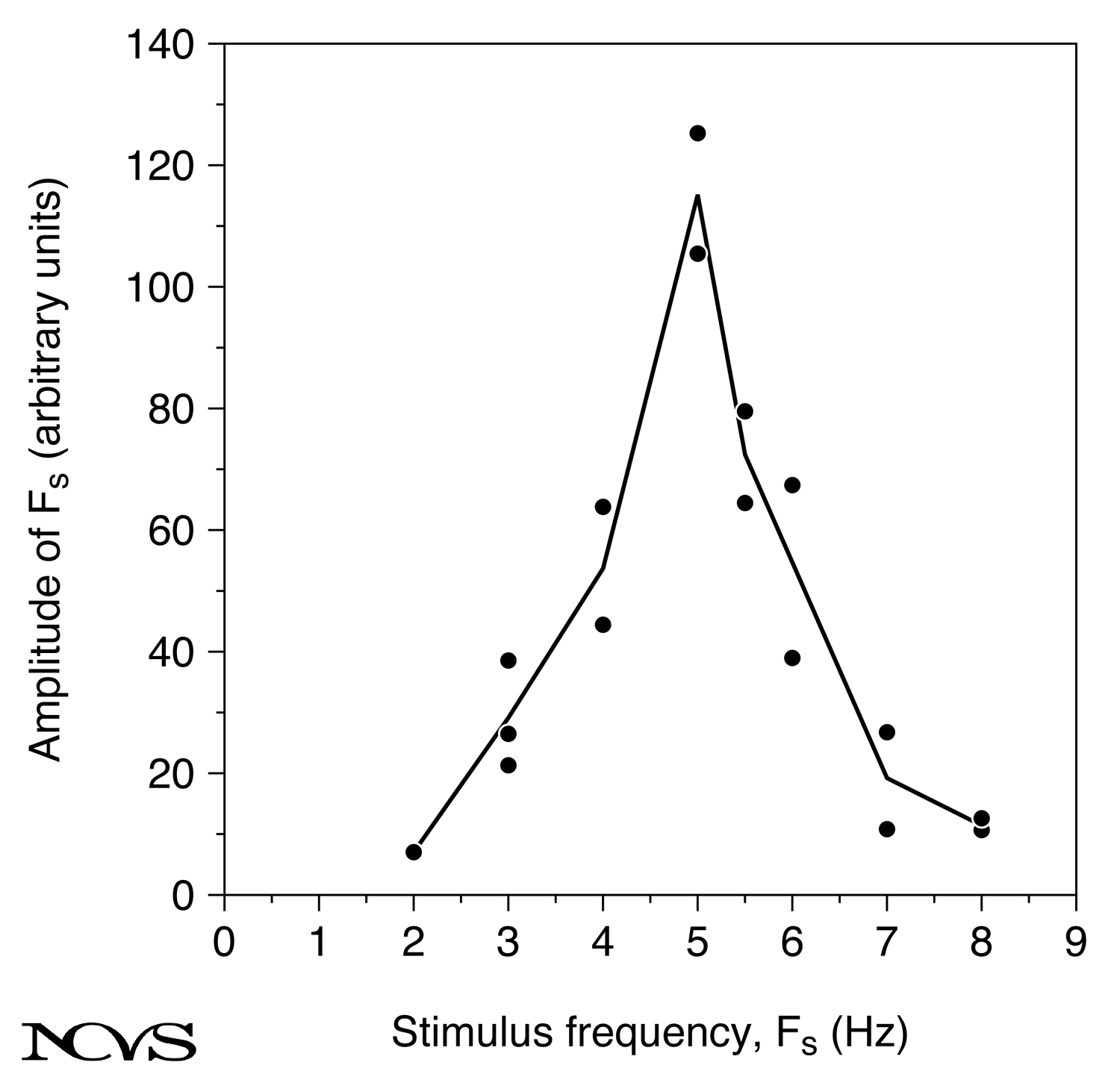 Figure 11.8: Examples of nonstationarity in voice signals including onset transients, tremor modulation, pitch glides, and voice breaks. These systematic variations distinguish Type 2 from Type 1 signals.
Tremor and Pathological Modulation
Tremor represents rhythmic oscillation of muscle activity, manifesting in voice as periodic modulation of F₀ and/or amplitude at 4-8 Hz. Unlike vibrato (aesthetically valued controlled modulation), tremor typically reflects neurological pathology or age-related changes.
Essential Tremor
Essential tremor (ET), the most common movement disorder, affects approximately 5% of adults over age 65. When laryngeal muscles are involved, voice shows:
Frequency: Tremor rate typically 4-6 Hz, slower than optimal vibrato Regularity: Relatively regular rate and depth, distinguishing it from random perturbation Amplitude: Modulation depth often exceeds 100 cents (1 semitone), greater than aesthetic vibrato Involuntary nature: Cannot be voluntarily suppressed completely Systemic distribution: Often affects hands, head, and other body parts beyond voice
Essential tremor may involve laryngeal muscles directly (intrinsic muscle tremor) or indirectly through respiratory muscle tremor modulating subglottal pressure. Both mechanisms produce voice modulation, though with somewhat different acoustic characteristics.
Parkinsonian Tremor
Parkinson’s disease produces characteristic 4-6 Hz rest tremor in limbs, though vocal manifestations differ somewhat from essential tremor:
Amplitude focus: Parkinsonian voice tremor often shows more prominent amplitude than F₀ modulation Reduced modulation depth: Modulation may be less pronounced than in essential tremor Associated features: Co-occurs with reduced loudness, monopitch, breathy quality Variable prominence: Tremor may be inconsistent, present in some phonation samples but not others
Distinguishing essential tremor from parkinsonian tremor requires considering the complete clinical picture, including non-vocal symptoms and neurological examination.
Age-Related Physiological Tremor
Many elderly individuals without diagnosed neurological disease develop physiological tremor affecting voice. This tremor:
- Tends to be less regular than pathological tremor
- Shows smaller modulation depth
- May increase with fatigue or stress
- Represents age-related changes in neuromuscular control rather than specific pathology
The boundary between normal age-related tremor and pathological tremor remains imprecise, representing a continuum rather than categorical distinction.
Analysis Challenges
Tremor creates severe problems for conventional perturbation analysis. A 5 Hz tremor with ±50 cent depth produces computed “jitter” values of 3-10% or higher—well into ranges suggesting severe pathology—despite representing regular periodic modulation rather than random perturbation.
Spectral analysis provides more appropriate assessment. Tremor manifests as sidebands around each harmonic at ±(tremor frequency). A voice with 150 Hz F₀ and 5 Hz tremor shows harmonic peaks at 150, 155, 145, 300, 305, 295 Hz, etc. The sideband amplitude indicates tremor depth.
Vibrato as Controlled Modulation
Vibrato represents aesthetically valued periodic modulation cultivated by singers. As discussed elsewhere in detail, vibrato typically exhibits 5-7 Hz rate with ±50-100 cent depth. For signal typing purposes, vibrato creates Type 2 characteristics demanding analysis distinct from Type 1 perturbation approaches.
Distinguishing Vibrato from Tremor
Both vibrato and tremor produce periodic modulation in similar frequency ranges (4-8 Hz), yet represent fundamentally different phenomena. Key distinctions:
Voluntary control: Singers can initiate, suppress, or modulate vibrato; tremor resists voluntary control Regularity: Vibrato maintains high consistency in rate and depth; tremor shows more variability Aesthetic quality: Vibrato enhances perceived voice quality; tremor detracts from it Waveform shape: Vibrato approximates sinusoidal modulation; tremor may show more irregular patterns Context: Vibrato appears in trained singing; tremor appears in neurological conditions or aging
These distinctions prove clear in prototypical cases but ambiguous in borderline situations. An elderly singer may exhibit characteristics intermediate between cultivated vibrato and age-related tremor.
Analysis Approaches
For voices with prominent vibrato, appropriate analysis includes:
Modulation frequency extraction: Identifying the vibrato rate through spectral analysis or autocorrelation of the F₀ contour Modulation depth measurement: Quantifying the extent of F₀ and amplitude variation Regularity assessment: Evaluating consistency of rate and depth Comparison to normative data: Interpreting whether the measured characteristics fall within optimal ranges for aesthetic vibrato
Conventional jitter and shimmer measures provide little useful information for vibrato voices, as these measures conflate the controlled modulation with random perturbation.
Glissandi and Pitch Trends
Glissandi (smooth pitch transitions) and other intentional pitch changes create obvious nonstationarity through systematic F₀ trends.
Intentional Pitch Changes
Speakers and singers frequently produce:
Upward glissandi: Rising pitch, as in interrogative intonation or portamento singing Downward glissandi: Falling pitch, as in declarative intonation or pitch fall at phrase endings Pitch steps: Discrete jumps between pitches, as in musical intervals or lexical tone languages Intonational contours: Complex pitch patterns conveying linguistic and emotional information
These intentional variations represent normal communicative or artistic behaviors. Analysis must distinguish them from pathological instability.
Voice Breaks and Register Transitions
Voice breaks involve abrupt disruptions in phonation, manifesting as:
- Brief aphonic segments (complete phonation cessation)
- Sudden F₀ jumps (often octave-related)
- Transient diplophonia (simultaneous multiple frequencies)
- Aperiodic bursts
Voice breaks can be:
Physiological: Normal register transitions (chest-falsetto breaks), intentional stylistic devices in some musical genres Developmental: Common in adolescent male voice change (mutational breaks) Pathological: Indicating neuromuscular control difficulties, vocal fold lesions, or inadequate technique
Register transitions between chest voice, head voice, and falsetto involve substantial biomechanical changes producing discontinuities in F₀ and amplitude contours. Singers work to smooth these transitions (“blend registers”), but even skilled singers show measurable transition regions.
Windowing and Detrending Strategies
When Type 2 signals must be analyzed, specialized approaches can mitigate nonstationarity problems.
Short-Time Analysis
Short-time analysis applies conventional measures to brief time windows (0.5-2.0 seconds) where the signal approximates stationarity. The analysis produces:
- Time-varying perturbation values tracking changes throughout phonation
- Identification of stable regions suitable for representative measurement
- Detection of progressive trends (increasing perturbation suggesting fatigue)
This approach requires:
- Sufficient window length for reliable statistics (typically 40-50 cycles minimum)
- Overlap between windows to track continuous changes
- Careful interpretation when even short windows show nonstationarity
Linear Detrending
Linear detrending removes linear F₀ or amplitude trends before computing perturbations. For a signal with systematic rise or fall, detrending:
- Fits a linear trend line to the F₀ contour
- Subtracts this trend, creating a detrended F₀ contour with stable mean
- Computes perturbation measures on the detrended signal
This approach effectively removes monotonic trends (onset/offset transients, progressive fatigue effects) while preserving cycle-to-cycle perturbations. However, it cannot address cyclic modulation (tremor, vibrato) where the trend is periodic rather than monotonic.
Modulation Filtering
For voices with tremor or vibrato, modulation filtering can separate:
- Low-frequency modulation component (tremor/vibrato)
- High-frequency perturbation component (cycle-to-cycle jitter)
This involves:
- Extracting the F₀ contour (fundamental frequency vs. time)
- High-pass filtering the F₀ contour at 3-4 Hz to remove tremor/vibrato
- Computing perturbation measures on the filtered contour
The low-frequency component provides tremor/vibrato characteristics, while the high-frequency residual represents true cycle-to-cycle perturbation. This separation enables independent assessment of modulation and perturbation.
Cepstral Analysis Alternatives
Cepstral peak prominence (CPP) and related cepstral measures provide voice quality assessment less sensitive to nonstationarity than conventional perturbation measures. The cepstrum naturally separates slowly-varying spectral envelope (vocal tract filter) from rapidly-varying harmonics (glottal source periodicity).
CPP quantifies the relative strength of the cepstral peak (indicating periodicity) versus the overall cepstrum, providing a voice quality index that:
- Tolerates moderate nonstationarity better than jitter/shimmer
- Correlates well with perceived dysphonia
- Handles Type 2 signals more robustly than conventional perturbation measures
This makes cepstral measures increasingly popular for clinical voice assessment, particularly with disordered voices likely to exhibit Type 2 characteristics.
Stationarity Assessment
Before applying conventional perturbation analysis, determining whether a signal satisfies stationarity assumptions proves essential.
Visual Inspection
Simple visual examination of waveform and F₀ contour often suffices to identify obvious nonstationarity:
- Clear upward or downward F₀ trends
- Periodic oscillation visible in F₀ contour
- Amplitude changes throughout the signal
- Voice breaks or abrupt discontinuities
Software displaying F₀ and amplitude contours alongside the waveform facilitates this assessment. Analysts should routinely inspect these displays before accepting perturbation results.
Statistical Tests
Formal statistical tests can quantify stationarity:
Runs test: Examines whether consecutive F₀ or amplitude values show random variation versus systematic trends. A run is a sequence of consecutive increases or decreases. Too few runs suggest trends.
Coefficient of variation: Comparing standard deviation to mean indicates relative variability. CV values exceeding certain thresholds (10-15% for F₀) suggest nonstationarity.
Spectral analysis of F₀ contour: Strong low-frequency components in the F₀ spectrum indicate tremor or vibrato.
Autocorrelation of F₀ contour: Periodic structure in the autocorrelation function reveals modulation.
Decision Rules
Based on stationarity assessment, analysts must decide:
Type 1: If the signal shows minimal trend and no significant modulation, apply conventional perturbation analysis Nonstationary or Type 2: If a substantial trend or modulation exists, either:
- Apply detrending/filtering before perturbation analysis
- Use alternative measures (CPP, spectral analysis)
- Describe the trend/modulation characteristics directly rather than computing perturbations
Type 3 (addressed separately): If the signal shows fundamental aperiodicity beyond modulation and subharmonics, conventional and Type 2 approaches both fail
Clinical Interpretation of Type 2 Signals
Type 2 characteristics carry diagnostic and prognostic significance distinct from Type 1 perturbation.
Normal Nonstationarity
Many Type 2 features represent normal variations:
- Onset/offset transients occur universally
- Intonational pitch changes convey linguistic information
- Aesthetic vibrato demonstrates training and artistic intent
- Momentary instability can occur even in healthy voices
Clinicians must distinguish these normal phenomena from pathological nonstationarity.
Pathological Indicators
Type 2 features suggesting pathology include:
Excessive tremor: Modulation depth >200 cents, irregular rate, inability to suppress Uncontrolled pitch instability: F₀ wandering without apparent intentional control Progressive deterioration: Worsening stability throughout phonation suggesting fatigue or inadequate closure Frequent voice breaks: Multiple phonation interruptions indicating neuromuscular control problems Prolonged transients: Onset/offset requiring >1 second suggesting coordination difficulties
The pattern, consistency, and context of Type 2 features inform clinical interpretation.
Treatment Monitoring
Type 2 characteristics can track treatment response:
- Voice therapy may reduce tremor amplitude or improve pitch stability
- Medical treatment (beta-blockers for essential tremor) may decrease modulation
- Surgical intervention for vocal fold lesions may reduce breaks and instability
- Skill acquisition (vibrato development) involves systematic changes in modulation characteristics
Sequential measurements document change more comprehensively than single-time-point assessment.
Summary
Nonstationarity—systematic trends, cyclic modulation, or abrupt changes in fundamental frequency and amplitude—violates the assumptions of conventional perturbation analysis; strong modulation and subharmonics also place a signal in Type 2 of Titze’s classification. Common phenomena include voice onset and offset transients (universally present, typically excluded from analysis), tremor and vibrato (4-8 Hz periodic modulation requiring spectral rather than perturbation analysis), pitch glides and intonational variation (intentional F₀ changes), and voice breaks (phonation disruptions indicating transition or pathology).
Conventional jitter and shimmer measures conflate systematic variation with random perturbation when applied to Type 2 signals, typically yielding artifactually elevated values. Appropriate Type 2 analysis employs short-time windowing, linear detrending, modulation filtering, or alternative measures like cepstral peak prominence that tolerate nonstationarity better. Stationarity assessment through visual inspection, statistical tests, and F₀ contour analysis should precede perturbation computation.
Clinical interpretation distinguishes normal nonstationarity (onset/offset, intonation, aesthetic vibrato) from pathological features (excessive tremor, uncontrolled instability, frequent breaks, prolonged transients). Understanding Type 2 signal characteristics enables appropriate analysis method selection and meaningful interpretation of vocal function in the presence of systematic variation.
Key Takeaways
- ✅ Trends, transients and strong modulation violate the stationarity assumption underlying conventional perturbation analysis; strong modulation and subharmonics define Type 2 signals in Titze’s (1995) scheme
- ✅ Onset and offset transients are always nonstationary; standard practice excludes first and last 0.5-1.0 seconds from analysis
- ✅ Tremor (4-8 Hz modulation from neurological pathology or aging) creates artifactually elevated jitter when analyzed with conventional methods
- ✅ Vibrato and tremor both produce periodic modulation in similar frequency ranges but differ in voluntary control, regularity, and aesthetic quality
- ✅ Appropriate Type 2 analysis uses detrending, modulation filtering, short-time windows, or alternative measures like cepstral peak prominence
- ✅ Spectral analysis reveals tremor/vibrato as sidebands around harmonics, enabling separate assessment from cycle-to-cycle perturbation
- ✅ Voice breaks, register transitions, and pitch glides represent additional nonstationary phenomena requiring specialized interpretation
- ✅ Stationarity assessment through visual inspection and statistical testing should precede perturbation analysis to ensure measurement validity
Related Topics
Further Reading
- Titze, I. R. (1995). Workshop on acoustic voice analysis: Summary statement. Denver, CO: National Center for Voice and Speech.
- Baken, R. J., & Orlikoff, R. F. (2000). Clinical measurement of speech and voice (2nd ed.). San Diego, CA: Singular Publishing Group.
- Heman-Ackah, Y. D., Michael, D. D., & Goding, G. S. (2002). The relationship between cepstral peak prominence and selected parameters of dysphonia. Journal of Voice, 16(1), 20-27.
- Brückl, M., & Ibragimova, E. (2012). Quantitative evaluation of vocal stability and tremor using acoustic analysis. Folia Phoniatrica et Logopaedica, 64(6), 295-303.