Some Definitions of Terms
Terms such as loudness, intensity, volume, and vocal power are often used interchangeably in everyday conversation and even in some professional contexts. However, these are not identical quantities, and understanding their precise definitions proves essential for scientific discussion of voice production and intensity control.
Loudness: A Perceptual Quantity
Loudness is fundamentally a perceptual quantity that can be assessed only with an auditory system, which includes both the peripheral hearing mechanism and the brain’s central processing. The nonuniform sensitivity of the auditory system to varying frequencies plays a critical role in loudness perception.
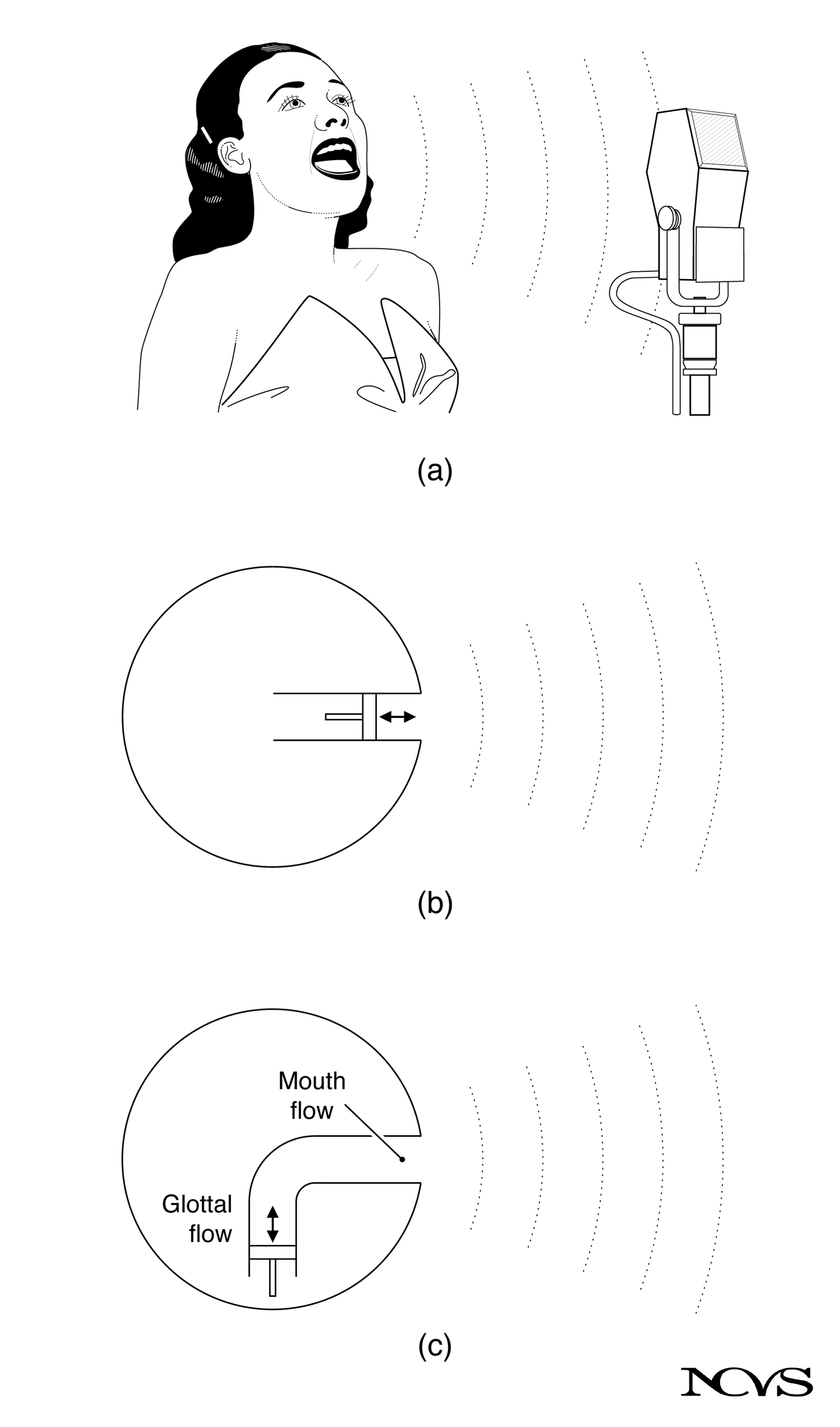 Figure 9.1: Volume of sound relates to acoustic power, whereas loudness is a psycho-physiological measure of the amount of sound we perceive.
Frequency Dependency of Loudness
Tones with equal acoustic energy are perceived as louder in the 1,000-Hz to 3,000-Hz region than below 1,000 Hz or above 3,000 Hz. This frequency-dependent sensitivity reflects the resonance characteristics of the outer and middle ear, combined with the mechanical properties of the basilar membrane and the neural coding strategies of the auditory nerve.
The fact that we can turn a radio volume control up and down and still distinguish whether a vocalist sings loud or soft provides evidence that loudness perception involves analysis of the sound’s spectrum, not merely the total amount of sound energy. A singer’s pianissimo at high frequencies may carry more total acoustic energy than a fortissimo at very low frequencies, yet listeners readily perceive the former as softer based on spectral distribution and contextual cues.
Acoustic Power: A Physical Measure
Acoustic power represents a physical measure of the amount of energy produced and radiated into the air per second. It is measured in watts, the same unit used for electrical, mechanical, and thermal power, enabling direct comparisons across different forms of energy.
Power in Context
To place vocal acoustic power in perspective, consider that a typical 100-watt incandescent light bulb consumes electrical power at a rate that vastly exceeds the acoustic power generated during speech. Normal conversational speech typically produces much less than 1 watt of acoustic power—often in the range of 10⁻⁵ to 10⁻³ watts. Even trained singers producing maximum vocal intensity rarely exceed 0.01 to 0.1 watts of radiated acoustic power.
This remarkably small power output becomes impressive only when we consider the sensitivity of the human auditory system. The ear can detect acoustic intensities corresponding to powers as low as 10⁻¹² watts/m² (the threshold of hearing), demonstrating an extraordinary dynamic range of approximately 120 dB.
Volume: A Relative Descriptor
Volume has no formal scientific definition but serves as the most popular descriptor of the “amount of sound” in everyday usage. Volume is measured in relative levels rather than absolute units. Some volume controls on audio equipment are calibrated in decibels (dB), but most use arbitrary numerical scales or unlabeled rotation ranges.
Musical Dynamic Markings
On musical scores, the markings pp (pianissimo), p (piano), mp (mezzo-piano), mf (mezzo-forte), f (forte), and ff (fortissimo) offer a guide to relative amounts of sound power within an individual’s dynamic range. If we assume that acoustic power doubles for each successive dynamic marking, the ratio of smallest to greatest acoustic power would be 1:32.
In logarithmic units, this represents a range of:
10 log₁₀(32/1) = 15 dBMany vocalists can achieve such a range of acoustic power over approximately two octaves of their pitch range. In the middle of their pitch range, some accomplished singers achieve a 30- to 40-dB intensity range, representing even greater dynamic control.
Intensity: Power Per Unit Area
Intensity carries a formal definition requiring elaboration concerning radiation from a sound source. Unlike acoustic power (which represents total energy radiated), intensity measures the power distributed over a specific area.
Formal Definition
Intensity (I) is measured in watts per square meter (watts/m²). It represents the acoustic power flowing through a unit area perpendicular to the direction of sound propagation. Our ears, microphones, and sound level meters are all sensitive to acoustic intensity—the amount of power distributed over the surface of the transducer (the eardrum or the microphone diaphragm).
Distance Dependency
A crucial distinction between power and intensity is that acoustic power remains constant as sound radiates from a source (energy is conserved), whereas intensity decreases with distance according to the inverse square law. At twice the distance from a sound source, the same total power is distributed over four times the area, resulting in one-quarter the intensity.
This distance dependency explains why vocal intensity measurements must always specify the measurement distance. A sound pressure level of 90 dB at 0.5 meters represents considerably more radiated power than 90 dB at 2.0 meters.
Practical Implications
Understanding these distinctions proves essential for:
- Clinical Assessment: When measuring vocal intensity, specifying whether we mean acoustic power (total radiated energy) or intensity (at a specific distance) affects interpretation
- Comparative Studies: Comparing intensity measurements across studies requires matching measurement distances and methods
- Perceptual Correlates: Predicting perceived loudness from physical measurements requires accounting for frequency content and auditory sensitivity
- Training Applications: Teaching singers and speakers about intensity control benefits from clear terminology distinguishing physical and perceptual quantities
Summary
The terms loudness, intensity, volume, and acoustic power describe related but distinct aspects of sound. Loudness represents a psychophysical perception dependent on the auditory system’s frequency-dependent sensitivity. Acoustic power measures the total energy radiated per second in watts. Volume serves as an informal relative descriptor common in everyday usage and musical notation. Intensity specifically measures power per unit area and decreases with distance from the source according to the inverse square law.
Precision in using these terms enables clearer communication about voice production, more accurate interpretation of measurements, and better understanding of the relationship between physical sound production and perceptual experience.
Key Takeaways
- ✅ Loudness is a psychophysical quantity requiring an auditory system, not a purely physical measurement
- ✅ Acoustic power measured in watts represents total energy radiated per second, typically less than 1 watt for speech
- ✅ Volume has no formal definition but commonly describes relative sound levels using arbitrary scales
- ✅ Musical dynamic markings from pp to ff typically span approximately 15-30 dB in acoustic power range
- ✅ Intensity measures power per unit area (watts/m²) and decreases with distance from the source
- ✅ Intensity measurements must specify distance; power measurements do not depend on measurement location
Related Topics
Further Reading
- Fletcher, H. (1953). Speech and hearing in communication. Princeton, NJ: D. Van Nostrand Company.
- Denes, P. B., & Pinson, E. N. (1963). The speech chain. New York: Bell Telephone Laboratory.
- Stevens, S. S., & Warshofsky, G. (1965). Sound and hearing. New York: Time, Inc.
- Strong, W., & Plitnik, G. (1983). Music speech high-fidelity (2nd Ed.). Orem, UT: Liberty Press.