Intensity Versus Intelligibility
The relationship between vocal intensity and speech intelligibility, while intuitively straightforward—louder should be clearer—proves remarkably complex upon careful examination. Multiple acoustic, articulatory, perceptual, and environmental factors mediate this relationship, with intensity alone neither necessary nor sufficient for optimal intelligibility. Understanding how intensity interacts with spectral balance, articulation precision, temporal patterning, and listening conditions enables more sophisticated approaches to improving communication effectiveness in both clinical and pedagogical contexts.
The Intensity-Intelligibility Relationship
Intensity affects intelligibility but not in simple linear fashion.
Basic Relationship
Audibility Threshold
Minimum intensity requirements:
- Speech must exceed hearing threshold
- Typically 20-30 dB sensation level needed
- Individual hearing sensitivity varies
- Background noise raises effective threshold
- Distance affects received intensity
- Audibility necessary but not sufficient
Optimal Intensity Range
Intelligibility versus SPL:
- Below 40 dB SPL: poor intelligibility (inaudible)
- 40-60 dB SPL: intelligibility improves rapidly
- 60-80 dB SPL: maximum intelligibility plateau
- Above 80 dB SPL: minimal further improvement
- May decrease if distortion occurs
- Individual and context variation
Non-Linear Effects
Diminishing Returns
Increasing intensity beyond moderate levels:
- Provides little additional intelligibility benefit
- Plateau effect around 60-70 dB SPL (quiet conditions)
- Excessive intensity may reduce quality
- Energy expenditure increases dramatically
- Listener comfort decreases
- Optimal rather than maximum intensity preferred
Context Dependency
Optimal intensity varies with:
- Distance between speaker and listener
- Ambient noise level
- Reverberation characteristics
- Listener hearing ability
- Number of listeners
- Communication purpose
Spectral Factors
Intensity distribution across frequencies matters as much as total intensity.
High-Frequency Emphasis
Importance for Intelligibility
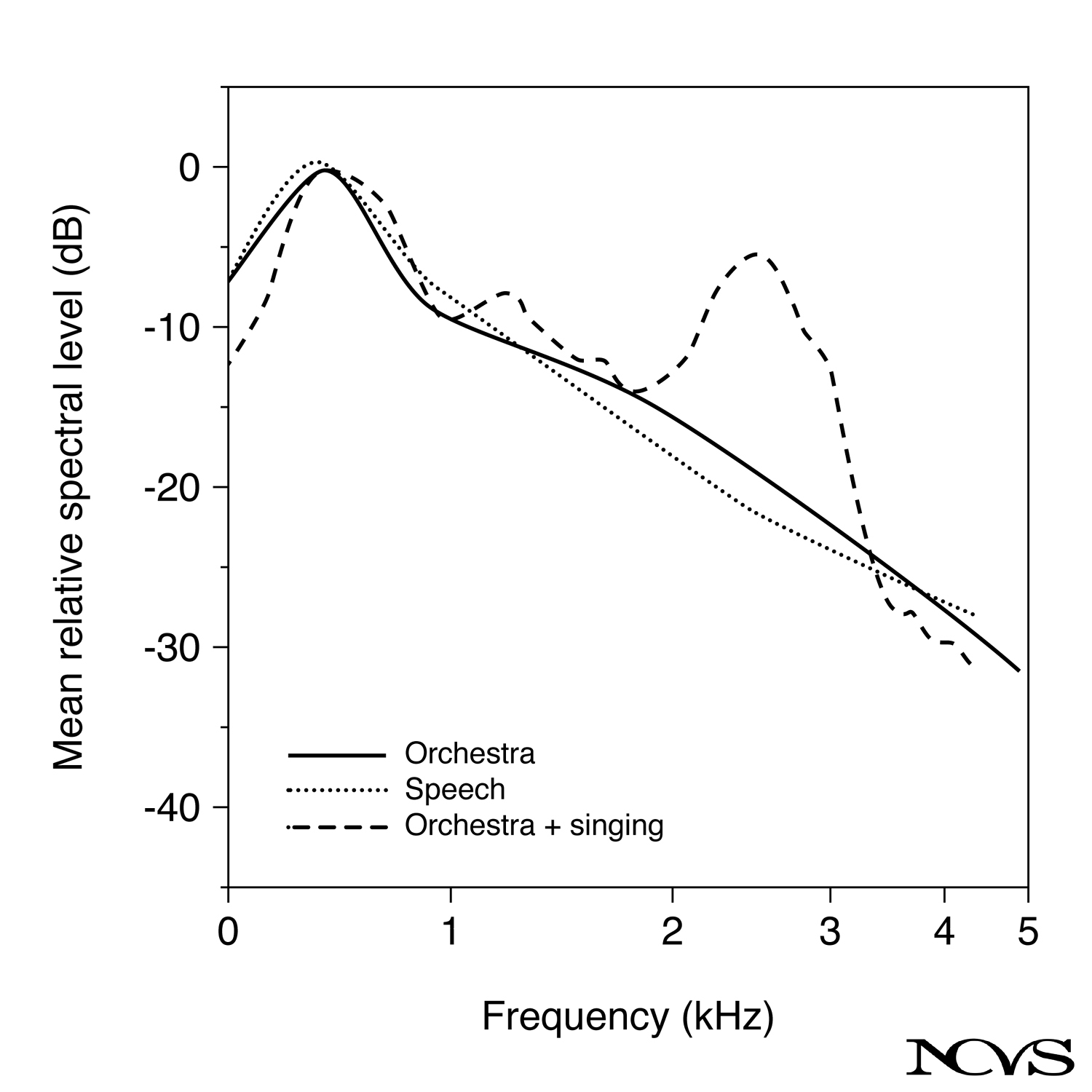 Figure 9.16: Graph showing speech intelligibility as function of overall intensity level and high-frequency spectral emphasis, demonstrating that spectral balance contributes as much or more to intelligibility than total intensity alone.
High frequencies (2-8 kHz) critical because:
- Consonant information concentrated here
- Consonants carry most linguistic information
- Vowels provide less disambiguation
- Fricatives, stops, affricates in high frequencies
- High-frequency boost improves intelligibility
- More effective than global intensity increase
Articulation Index / Speech Intelligibility Index
Quantitative frameworks:
- Weight frequency bands by importance
- High frequencies weighted more heavily
- Predicts intelligibility from spectrum and noise
- Guides hearing aid fitting
- Explains why spectral balance matters
- Intensity alone insufficient metric
Lombard Effect Revisited
Adaptive Spectral Changes
Speaking in noise produces:
- Overall intensity increase (3-10 dB)
- Disproportionate high-frequency emphasis
- Enhanced F1 frequency (vowels more distinct)
- Longer durations
- Clearer articulation
- Improves intelligibility beyond intensity alone
Mechanism
Auditory feedback drives adaptation:
- Speaker monitors own voice
- Adjusts multiple parameters simultaneously
- Involuntary but modifiable
- Evolutionary adaptive response
- Training can enhance natural effect
- Combines intensity with spectral optimization
Articulation Precision
How sounds are produced affects intelligibility independent of intensity.
Precision-Intelligibility Relationship
Clear Speech
Characteristics of clear speaking:
- More precise consonant articulation
- Greater vowel space expansion
- Longer segment durations
- Enhanced spectral contrast
- Improved intelligibility without necessarily louder
- 10-20% intelligibility improvement typical
Over-Articulation Limits
Excessive precision can:
- Sound unnatural or patronizing
- Slow communication rate excessively
- Create listener discomfort
- Reduce prosodic naturalness
- Optimal clarity balance needed
- Context and listener guide appropriate level
Intensity-Articulation Trade-Off
Loud But Imprecise
Shouting often involves:
- High intensity
- But reduced articulation precision
- Spectral distortion
- Temporal compression
- Net intelligibility may decrease
- Particularly problematic in noise
Quiet But Clear
Conversely, soft precise speech can achieve:
- Good intelligibility despite low intensity
- In quiet conditions
- Close proximity to listener
- Requires excellent articulation control
- Professional voice users exploit this
- Theatrical “stage whisper” example
Speaking Rate Effects
Temporal patterning interacts with intensity for intelligibility.
Rate-Intelligibility Relationship
Optimal Speaking Rate
Intelligibility versus rate:
- Very slow (<100 words/min): awkward, poor prosody
- Slow-moderate (120-150 words/min): maximum intelligibility
- Normal conversational (150-180 words/min): good intelligibility
- Fast (180-220 words/min): declining intelligibility
- Very fast (>220 words/min): significantly reduced
- Individual variation substantial
Interaction with Intensity
Rate-intensity combinations:
- Slow + moderate intensity: excellent intelligibility (but unnatural)
- Normal rate + moderate intensity: optimal for most contexts
- Fast + high intensity: may still have poor intelligibility
- Fast + clear articulation: can maintain intelligibility
- Cannot compensate poor articulation with intensity alone
- Multidimensional optimization needed
Duration and Temporal Contrasts
Segment Duration
Longer phoneme durations:
- Allow better auditory processing
- Enhance spectral identification
- Particularly help consonants
- But slow overall communication
- Trade-off with naturalness and efficiency
- Strategic lengthening effective (stressed syllables)
Pausing
Pause patterns affect intelligibility:
- Appropriate pausing segments information
- Allows listener processing time
- Marks syntactic boundaries
- Too few pauses: reduced intelligibility
- Too many pauses: awkward, slow
- Intensity cannot compensate for poor phrasing
Environmental Factors
Listening conditions dramatically affect intensity-intelligibility relationship.
Background Noise
Signal-to-Noise Ratio
Most critical factor:
- Speech must exceed noise by sufficient margin
- Typical requirement: +5 to +15 dB SNR
- As noise increases, required speech level increases
- But listener comfort limits speech level
- Diminishing returns at very adverse SNRs
- Noise reduction often more effective than intensity increase
Noise Type Effects
Different noises affect intelligibility differently:
- Steady-state noise: relatively predictable effect
- Fluctuating noise: glimpsing opportunities
- Competing speech: particularly difficult
- Low-frequency noise: masks vowels
- High-frequency noise: masks consonants
- Spectral matching matters
Reverberation
Temporal Smearing
Reverberation effects:
- Prolongs sounds, creates overlap
- Reduces temporal contrasts
- Fills pauses
- Particularly affects consonants
- Excessive intensity increases reverberation energy
- Optimal intensity lower in reverberant spaces
- Speaking rate reduction more effective
Distance Effects
Far-field listening:
- Direct sound decreases with distance
- Reverberant field relatively constant
- Direct-to-reverberant ratio declines
- Intelligibility decreases
- Intensity increase helps less than expected
- Directional speech projection more effective
Room Acoustics
Acoustic Treatment
Environmental modifications:
- Sound absorption reduces reverberation
- Improves intelligibility at all intensities
- Noise barriers reduce background
- Amplification systems (properly designed)
- Often more effective than speaker intensity increase
- Architectural considerations important
Listener Factors
Individual listener characteristics affect intensity needs.
Hearing Loss
Elevated Thresholds
Hearing impaired listeners need:
- Higher absolute intensities
- But also better spectral balance
- Reduced dynamic range tolerance
- Enhanced temporal cues
- Visual cues (lip-reading)
- Intensity increase alone insufficient
Supra-Threshold Processing
Even with audibility:
- Reduced frequency resolution
- Impaired temporal processing
- Difficulty in noise
- Reduced redundancy utilization
- Clear speech strategies essential
- Intensity optimization part of solution
Age Effects
Presbycusis
Older adults typically show:
- High-frequency hearing loss
- Reduced temporal processing
- Cognitive processing decline
- Greater noise susceptibility
- Require multifaceted approach
- Intensity increase helps but limited
Central Auditory Processing
Even with normal hearing:
- Age-related central processing changes
- Reduced speech-in-noise performance
- Clear speech more important than loud
- Speaking rate reduction helpful
- Multimodal communication beneficial
- Holistic communication strategy needed
Clinical Implications
Managing intensity for intelligibility in voice disorders.
Assessment
Intelligibility Measurement
Clinical evaluation:
- Word or sentence intelligibility testing
- Quiet and noise conditions
- Various intensity levels
- Identify optimal intensity for clarity
- Document functional limitations
- Guide treatment planning
Functional Communication Assessment
Real-world scenarios:
- Conversational intelligibility
- Telephone communication
- Group settings
- Environmental noise contexts
- Distance communication
- Patient-reported difficulties
Disorders Affecting Intensity-Intelligibility
Dysarthria
Motor speech disorders show:
- Reduced intensity range
- Poor articulation precision
- Abnormal rate
- Multiple factors compound
- Intensity alone rarely sufficient solution
- Comprehensive approach needed
Hypofunctional Disorders
Weak voice conditions:
- Inadequate intensity main complaint
- But articulation often also impaired
- Breathiness reduces spectral clarity
- Therapy targets multiple parameters
- Intensity increase with quality maintenance
- Comprehensive voice therapy
Hyperfunctional Disorders
Excessive tension patterns:
- Adequate or excessive intensity
- But poor quality reduces intelligibility
- Spectral distortion from tension
- Reduced flexibility
- Therapy reduces intensity while improving quality
- Paradoxical improvement with softer voice
Therapeutic Strategies
Optimizing Intelligibility
Treatment targets:
- Adequate but not excessive intensity
- Enhanced high-frequency energy
- Precise articulation training
- Appropriate speaking rate
- Clear speech strategies
- Environmental modifications
Lee Silverman Voice Treatment (LSVT)
Parkinson’s disease approach:
- “Think loud” cueing
- Intensive intensity training
- But also improves articulation
- Enhanced respiratory support
- Increases effort overall
- Multiple mechanisms contribute to benefit
Pedagogical Applications
Teaching optimal intensity use for intelligibility.
Public Speaking Training
Projection Techniques
Effective strategies:
- Adequate breath support
- Forward resonance placement
- Clear articulation emphasis
- Appropriate rate control
- Audience size/distance adjustment
- Venue acoustics consideration
Common Errors
Problematic approaches:
- Shouting (loses quality and precision)
- Throat tension (reduces flexibility)
- Excessive intensity without clarity
- Ignoring articulation
- Inappropriate rate
- Must address multiple factors
Classroom and Teaching Contexts
Voice Conservation
Professional voice users need:
- Efficient intensity production
- Clear articulation to reduce intensity needs
- Environmental acoustic optimization
- Amplification when appropriate
- Vocal hygiene
- Sustainable strategies
Student Needs
Children and learning contexts:
- Developing auditory systems
- Attention limitations
- Clear speech particularly important
- Moderate intensity with excellent clarity
- Visual support helpful
- Multimodal instruction
Communication Strategies
Practical approaches to maximize intelligibility.
Speaker Strategies
Multiparameter Optimization
Effective communication involves:
- Moderate intensity (not maximum)
- Enhanced articulatory precision
- High-frequency emphasis
- Appropriate rate
- Strategic pausing
- Prosodic clarity
Adaptive Control
Adjusting to conditions:
- Assess acoustic environment
- Monitor listener comprehension
- Modify multiple parameters
- Don’t rely on intensity alone
- Use feedback to refine approach
- Flexibility key
Listener Strategies
Enhancing Reception
Listeners can:
- Position for optimal hearing
- Reduce distance when possible
- Manage environmental noise
- Use visual cues
- Request clarification
- Advocate for better conditions
Environmental Modifications
System-Level Changes
Often most effective:
- Reduce background noise sources
- Improve room acoustics
- Use appropriate amplification
- Optimize lighting for lip-reading
- Arrange seating appropriately
- Address problem at source
Summary
The relationship between vocal intensity and speech intelligibility is complex and non-linear, with intelligibility improving rapidly from 40-60 dB SPL but plateauing at 60-80 dB SPL where further intensity increases provide minimal benefit and may reduce quality or listener comfort. High-frequency spectral emphasis (2-8 kHz) contributes as much or more to intelligibility than total intensity because consonant information concentrated in this region carries primary linguistic content, with the Lombard effect in noise producing not only 3-10 dB intensity increase but also disproportionate high-frequency emphasis and enhanced articulation that improve intelligibility beyond intensity alone.
Articulation precision affects intelligibility independent of intensity, with clear speech producing 10-20% intelligibility improvement through precise consonant articulation, expanded vowel space, and enhanced spectral contrast without necessarily increased loudness, while loud but imprecise shouting can reduce intelligibility despite high intensity. Speaking rate interacts with intensity, with optimal rates (120-150 words/min) maximizing intelligibility while fast speech maintains poor intelligibility even at high intensity, and appropriate pausing segments information allowing listener processing time that intensity cannot compensate.
Environmental factors dramatically mediate the intensity-intelligibility relationship, with signal-to-noise ratio typically requiring +5 to +15 dB SNR for adequate intelligibility, and reverberation creating temporal smearing where excessive intensity increases reverberant energy reducing clarity more than helping, making speaking rate reduction and spectral optimization more effective than intensity increase in challenging acoustic conditions. Listener factors including hearing loss (requiring higher intensity but also better spectral balance and temporal cues) and age-related processing decline (benefiting more from clear speech than loud speech) necessitate multifaceted approaches where intensity optimization represents only one component of comprehensive communication strategies addressing articulation, rate, spectral balance, and environmental modifications.
Key Takeaways
- ✅ Intensity-intelligibility relationship non-linear: rapid improvement 40-60 dB, plateau 60-80 dB, minimal benefit beyond
- ✅ High-frequency emphasis (2-8 kHz) equals or exceeds total intensity importance because consonants carry linguistic information
- ✅ Lombard effect produces intensity + high-frequency emphasis + enhanced articulation, improving intelligibility multi-dimensionally
- ✅ Clear speech gives 10-20% intelligibility boost independent of intensity through precise articulation and spectral contrast
- ✅ Speaking rate interacts with intensity: optimal rates (120-150 wpm) maximize intelligibility; fast speech poor despite loudness
- ✅ Signal-to-noise ratio (+5 to +15 dB SNR) and reverberation mediate intensity-intelligibility relationship more than absolute level
- ✅ Listener factors (hearing loss, aging) benefit more from clear speech strategies than intensity increase alone
- ✅ Multifaceted approach: optimize intensity, articulation, rate, spectral balance, and environment for maximum intelligibility
Related Topics
- Use of Intensity Variation
- The Call and Y-Buzz
- Combined Intensity Changes
- Speech Acoustics
- Articulation
Further Reading
- Krause, J. C., & Braida, L. D. (2004). Acoustic properties of naturally produced clear speech. Journal of the Acoustical Society of America, 115, 362-378.
- Picheny, M. A., Durlach, N. I., & Braida, L. D. (1985). Speaking clearly for the hard of hearing I: Intelligibility differences between clear and conversational speech. Journal of Speech and Hearing Research, 28, 96-103.
- French, N. R., & Steinberg, J. C. (1947). Factors governing the intelligibility of speech sounds. Journal of the Acoustical Society of America, 19, 90-119.
- Bradlow, A. R., Kraus, N., & Hayes, E. (2003). Speaking clearly for children with learning disabilities: Sentence perception in noise. Journal of Speech, Language, and Hearing Research, 46, 80-97.
- Ramig, L. O., Sapir, S., Fox, C., & Countryman, S. (2001). Changes in vocal loudness following intensive voice treatment (LSVT) in individuals with Parkinson’s disease. Journal of Speech, Language, and Hearing Research, 44, 453-462.