Vocal Ring (the Singer’s Formant)
The singer’s formant, manifested perceptually as “vocal ring” or “squillo,” represents a distinctive acoustic characteristic of trained classical singing voices. This spectral energy concentration in the 2-4 kHz region—substantially above typical speaking voice formants—provides dramatic enhancement of vocal projection and enables singers to be heard over orchestral accompaniment without excessive vocal effort. Understanding the acoustic mechanisms, anatomical adjustments, and pedagogical strategies underlying the singer’s formant illuminates fundamental principles of vocal efficiency and projection.
Acoustic Characteristics
The singer’s formant manifests as a distinctive peak in the long-term average spectrum.
Spectral Energy Peak
Frequency Location
The singer’s formant appears:
- Between approximately 2000-4000 Hz
- Males: typically 2500-3000 Hz
- Females: typically 3000-3500 Hz (less prominent than males)
- Individual variation within these ranges
- Relatively consistent across pitch changes
- Independent of vowel identity
Spectral Prominence
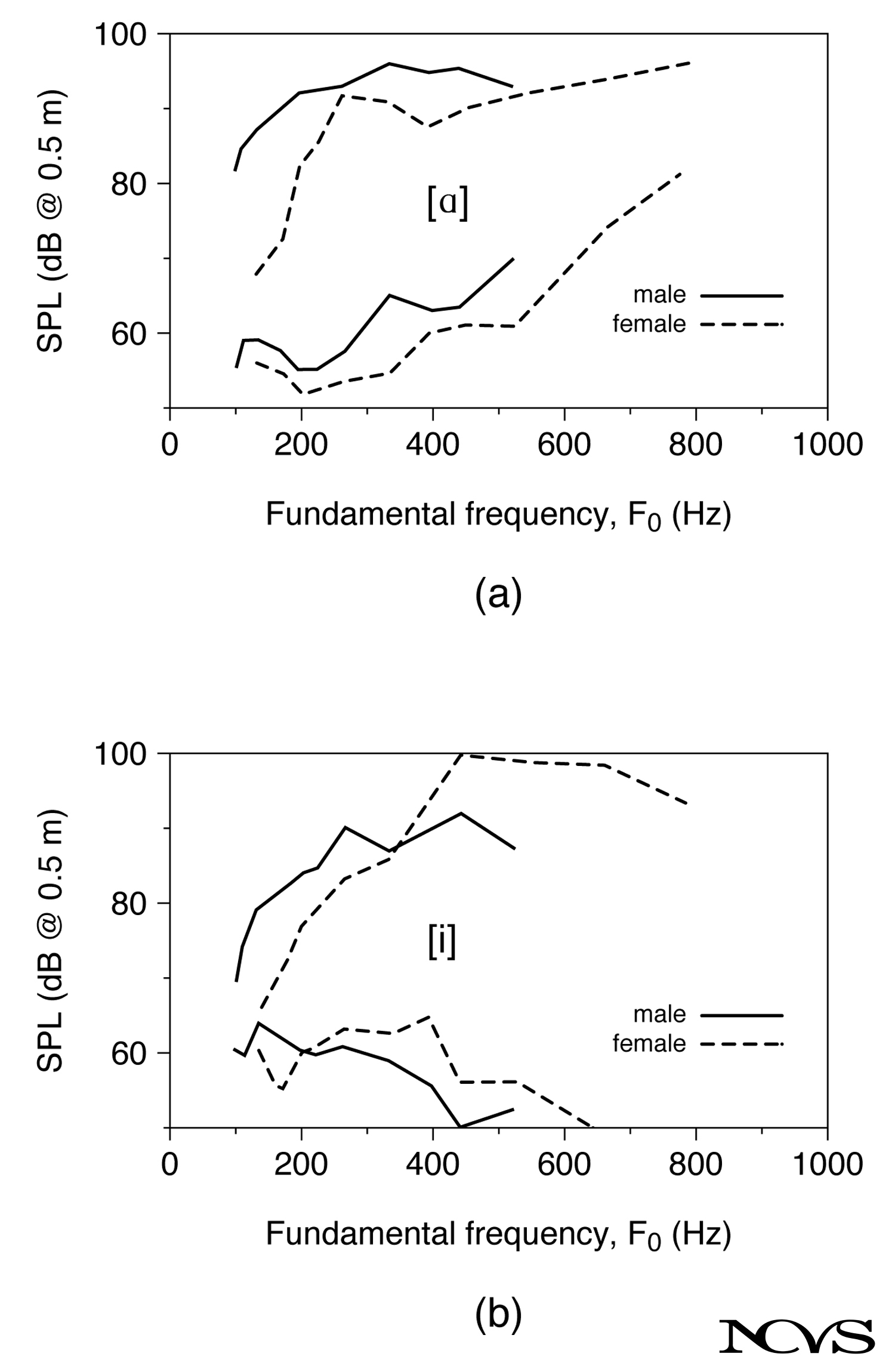 Figure 9.13: Comparison of long-term average spectra between trained classical singers (showing prominent energy peak at 2.5-3 kHz) and untrained speakers (lacking this characteristic enhancement), demonstrating the acoustic signature of the singer’s formant.
Energy characteristics:
- 10-30 dB elevation above adjacent frequencies
- Broad bandwidth (500-1000 Hz)
- Visible in long-term average spectrum (LTAS)
- Present across all vowels in singing
- Distinguishes trained from untrained voices
- Correlates with projection and “carrying power”
Perceptual Consequences
Enhanced Projection
Perceptual advantages:
- Voice “cuts through” orchestral sound
- Increased intelligibility at distance
- Greater perceived loudness for given effort
- Characteristic “ring” or “brilliance” quality
- Professional voice quality marker
- Easier audience comprehension
Acoustic Basis of Projection
The 2-4 kHz region is optimal for projection because:
- Orchestral music has spectral valley in this region
- Human hearing most sensitive around 3-4 kHz
- Atmospheric absorption minimal at these frequencies
- Harmonics in this region well-radiated from mouth
- Matches communication channel characteristics
- Evolutionary auditory system tuning
Anatomical and Acoustic Mechanisms
The singer’s formant arises from specific laryngeal and vocal tract adjustments.
Formant Clustering Theory
F3-F4-F5 Convergence
Predominant explanation:
- Third, fourth, and fifth formants cluster together
- Clustering occurs around 2.5-3.5 kHz
- Combined energy of multiple formants creates peak
- Formant bandwidths overlap
- Summed amplitudes produce prominent spectral feature
- Depends on specific vocal tract shape
Piriform Fossa Contribution
Additional resonance from:
- Piriform sinuses (pyriform fossae) in laryngopharynx
- Natural resonance around 3-4 kHz
- Bilateral cavities lateral to larynx
- Fixed resonance frequency (anatomical structure)
- Adds energy to singer’s formant region
- Contributes to individual timbre
Required Vocal Tract Adjustments
Laryngeal Position and Configuration
Key adjustments include:
- Lower laryngeal position (than conversational speech)
- Increased laryngopharyngeal space
- Epilarynx tube narrowing (aryepiglottic constriction)
- Creates “megaphone” or inverted cone shape
- Facilitates formant clustering
- Characterizes classical singing technique
Pharyngeal Widening
Additional configuration:
- Expanded pharyngeal cavity
- Raised soft palate
- Lowered tongue root
- Increased cross-sectional area
- Lowers F1 and F2
- Allows F3-F4-F5 clustering above
Epilaryngeal Narrowing
Critical adjustment:
- Constriction in epilarynx region
- Aryepiglottic sphincter engagement
- Creates acoustic coupling conditions
- Essential for formant clustering
- Must be balanced (not excessive)
- Requires training to achieve consistently
Gender Differences
The singer’s formant manifests differently in male and female voices.
Male Voices
Prominent Singer’s Formant
Characteristics in male singers:
- Very clear spectral peak around 2.5-3 kHz
- 15-30 dB above adjacent frequencies
- Present in all trained classical male singers
- Essential for professional technique
- Easily measurable in LTAS
- Defining acoustic characteristic
Acoustic Advantage
Males benefit especially because:
- F0 well below singer’s formant region
- Many harmonics pass through formant cluster
- Each amplified by formant resonances
- Cumulative enhancement substantial
- Natural advantage for lower-pitched voices
- Exploited in classical technique development
Female Voices
Less Prominent but Present
In female singers:
- Singer’s formant less conspicuous than males
- May appear as broad spectral emphasis rather than sharp peak
- Higher F0 means fewer harmonics in region
- Individual variation greater
- Still contributes to projection
- Other strategies also important
Alternative Projection Strategies
Sopranos particularly rely on:
- Formant tuning (F1-F0 alignment at high pitches)
- Overall spectral balance
- High-frequency harmonic energy
- Vibrato characteristics
- Optimal vowel modification
- Multiple complementary strategies
Voice Type Variation
Singer’s formant characteristics vary across vocal classifications.
Bass and Baritone
Most Prominent Singer’s Formant
Lower male voices show:
- Very strong singer’s formant peak
- Central frequency around 2.5-2.8 kHz
- Critical for projection (many harmonics present)
- Develops relatively early in training
- Less reliance on extreme high notes
- Formant cluster primary projection mechanism
Tenor
High-Frequency Extension
Tenor voices demonstrate:
- Singer’s formant around 2.8-3.2 kHz
- Must balance with high-note demands
- Formant tuning becomes important in upper range
- Combined strategies for projection
- Individual variation in formant prominence
- Technical demands substantial
Alto and Mezzo-Soprano
Intermediate Characteristics
Female middle voices:
- Moderate singer’s formant development
- Frequency around 3.0-3.5 kHz
- Blends with other projection strategies
- Training enhances prominence
- Balance between different mechanisms
- Individual approaches vary
Soprano
Multiple Strategy Integration
Soprano projection involves:
- Less prominent singer’s formant peak
- Formant tuning critical at high pitches
- Overall spectral richness important
- Vibrato contributes significantly
- High-frequency harmonics essential
- Sophisticated technical coordination required
Development and Training
Acquiring the singer’s formant requires systematic technical development.
Pedagogical Approaches
Traditional Imagery
Common teaching metaphors:
- “Yawn” or “open throat”
- “Dark” or “covered” tone
- “Round” sound quality
- “Depth” in voice
- “Resonant” quality
- “Support from below”
While imagery varies, these cues typically facilitate:
- Lowered larynx
- Expanded pharynx
- Raised soft palate
- Appropriate epilaryngeal adjustment
- Configurations promoting formant clustering
Acoustic Feedback Methods
Modern approaches include:
- Real-time spectral display
- Long-term average spectrum analysis
- Visual biofeedback of formant structure
- Makes implicit knowledge explicit
- Accelerates learning process
- Individualizes technical development
Progressive Development Stages
Stage 1: Basic Configuration
Initial development focuses on:
- Comfortable, moderate laryngeal lowering
- Pharyngeal space awareness
- Distinction from pressed or constricted production
- Stability of configuration
- Integration with breathing
- Vowel consistency
Stage 2: Spectral Enhancement
Intermediate development:
- Increasing spectral energy in 2-4 kHz region
- Monitoring with acoustic analysis when available
- Developing kinesthetic awareness
- Consistency across pitch range
- Vowel adaptation strategies
- Dynamic control maintenance
Stage 3: Artistic Integration
Advanced mastery involves:
- Automatic production of singer’s formant
- Adjustment for different repertoire styles
- Balance with other acoustic qualities
- Expressive variation while maintaining projection
- Vocal health preservation
- Individual artistic voice development
Common Technical Challenges
Excessive Constriction
Problems arise when:
- Laryngeal depression too extreme
- Epilaryngeal constriction excessive
- Pharyngeal tension develops
- Sound becomes “covered” to excess
- Flexibility and agility compromised
- Vocal fatigue results
Insufficient Development
Underdevelopment produces:
- Lack of projection despite effort
- Difficulty being heard over orchestra
- Excessive vocal force to compensate
- Potential vocal damage
- Professional limitations
- Need for amplification inappropriately
Individual Variation
Teaching must account for:
- Anatomical differences affecting optimal strategy
- Natural resonance characteristics
- Previous training influences
- Aesthetic goals and style preferences
- Professional context requirements
- Health and sustainability priorities
Style and Genre Considerations
The singer’s formant is characteristic of specific vocal styles.
Classical Opera and Concert
Defining Characteristic
In Western classical singing:
- Singer’s formant essential
- Unamplified performance requirement
- Orchestral accompaniment demands projection
- Acoustic space (opera house, concert hall) requires carrying power
- Historical performance practice established tradition
- Pedagogical systems built around developing it
Training Emphasis
Classical pedagogy prioritizes:
- Early development of singer’s formant
- Consistency across range and repertoire
- Integration with other technical elements
- Professional standard requires it
- Audition and performance assessment includes it
- Career success depends on it
Musical Theater and Contemporary Styles
Reduced Emphasis or Absence
In amplified genres:
- Microphone amplification removes projection necessity
- More speech-like vocal quality often preferred
- Singer’s formant may sound “too operatic”
- Different aesthetic priorities
- Technical approach differs
- Versatility valued over specific formant structure
Style-Appropriate Production
Contemporary commercial music training:
- Emphasizes other acoustic features
- Brightness and edge from different mechanisms
- Flexibility and style range prioritized
- Belt and mix techniques (different configurations)
- Microphone technique integrated
- Singer’s formant not central goal
Choral Singing
Blend Considerations
In ensemble contexts:
- Extreme singer’s formant may hinder blend
- Moderate development often optimal
- Balance between projection and blend
- Conductor preferences influence approach
- Professional choral singers develop flexibility
- Context-dependent technical adjustments
Acoustic Measurements and Analysis
Quantifying the singer’s formant aids research, teaching, and assessment.
Long-Term Average Spectrum (LTAS)
Primary Analysis Method
LTAS reveals singer’s formant by:
- Averaging spectrum over extended sample (30+ seconds)
- Smoothing out pitch and vowel variations
- Revealing consistent spectral features
- Showing energy distribution across frequency
- Clear peak at 2-4 kHz in trained singers
- Quantifiable measure of prominence
Measurement Metrics
Specific measures include:
- Peak frequency (Hz)
- Peak amplitude (dB)
- Prominence relative to adjacent valleys
- Bandwidth of enhancement
- Energy ratio (2-4 kHz vs. other regions)
- Comparison to normative data
Spectrographic Analysis
Time-Frequency Visualization
Spectrograms show:
- Formant clustering across time
- Consistency of singer’s formant across pitches and vowels
- Individual formant trajectories
- Relationship to fundamental and harmonics
- Visual documentation for teaching
- Research into acquisition and development
Real-Time Feedback Systems
Pedagogical Applications
Modern technology enables:
- Immediate visual display during singing
- Student sees spectral energy distribution
- Target regions highlighted
- Progress tracking over sessions
- Objective verification of subjective sensations
- Enhanced learning efficiency
Relationship to Other Acoustic Features
The singer’s formant interacts with other voice characteristics.
Vibrato
Complementary Projection Mechanism
Vibrato enhances projection through:
- Frequency modulation spreads energy across harmonics
- Multiple harmonics sweep through singer’s formant
- Cumulative enhancement of prominence
- Perceptual fusion and richness
- Combined with singer’s formant for maximum effect
- Trained singers coordinate both
Formant Tuning
Synergistic Strategies
In high-pitched singing:
- Formant tuning (F1-F0) provides primary intensity boost
- Singer’s formant adds consistent spectral richness
- Combined effects multiplicative
- Both require vocal tract adjustments
- Coordinated development optimal
- Maximum projection achieved through both
Source Spectrum Characteristics
Glottal Source Contribution
Singer’s formant depends on:
- Adequate harmonic energy in 2-4 kHz region
- Strong glottal closure pattern
- Efficient oscillation producing rich spectrum
- Source-filter interaction
- Optimal adduction and pressure
- Balanced coordination of subsystems
Clinical and Health Considerations
Singer’s formant development relates to vocal health and efficiency.
Efficiency Advantages
Reduced Vocal Load
Proper singer’s formant technique:
- Achieves projection with less effort
- Reduces need for excessive pressure
- Decreases collision forces
- Lowers phonotrauma risk
- Enables sustained performance
- Promotes vocal longevity
Acoustic Amplification
Resonance strategy advantages:
- Amplifies acoustic output 10-20 dB
- Equivalent loudness with lower subglottal pressure
- More efficient than force-based projection
- Reduces laryngeal mechanical stress
- Sustainable for long performances
- Professional career protection
Potential Dysfunction
Excessive or Imbalanced Development
Problems may arise from:
- Excessive laryngeal depression (tension)
- Over-constriction (strain)
- Inappropriate style application
- Neglect of other technical elements
- Forced development before readiness
- Individual anatomical mismatch
Clinical Assessment
Voice professionals should:
- Evaluate appropriateness for style and goals
- Monitor for signs of misuse
- Ensure balanced technical development
- Recognize individual variation
- Integrate health and aesthetic considerations
- Provide style-appropriate guidance
Summary
The singer’s formant represents a distinctive spectral energy peak at 2-4 kHz (males 2.5-3 kHz, females 3-3.5 kHz) arising from clustering of third, fourth, and fifth formants with possible contribution from piriform fossa resonance, producing 10-30 dB energy enhancement that enables vocal projection over orchestral accompaniment. This acoustic phenomenon results from specific vocal tract adjustments including lowered larynx, expanded pharynx, and epilaryngeal narrowing that create conditions for formant convergence, with the 2-4 kHz region optimal for projection due to orchestral spectral valley, peak human hearing sensitivity, and minimal atmospheric absorption.
The singer’s formant manifests more prominently in male voices (very clear peak) than female voices (broader spectral emphasis) because lower fundamental frequency means more harmonics pass through the formant cluster region in males, though females employ complementary projection strategies including formant tuning. Development through training progresses from basic configuration establishment through spectral enhancement monitoring to artistic integration, using traditional imagery (“open throat,” “covered” tone) or modern acoustic feedback methods, with classical opera and concert pedagogy emphasizing singer’s formant as essential requirement while amplified contemporary genres deemphasize or avoid it for style-appropriate production.
Measurement via long-term average spectrum analysis quantifies peak frequency, amplitude, and prominence, with trained singers showing 2-3 times greater energy in 2-4 kHz region than untrained speakers. The singer’s formant interacts synergistically with vibrato (frequency modulation spreads energy across harmonics) and formant tuning (particularly in soprano high notes) for maximum projection, while providing efficiency advantages through acoustic amplification achieving 10-20 dB enhancement that reduces need for excessive subglottal pressure and laryngeal mechanical stress, promoting vocal health and career longevity.
Key Takeaways
- ✅ Singer’s formant is spectral energy peak at 2-4 kHz (males 2.5-3 kHz, females 3-3.5 kHz) with 10-30 dB enhancement
- ✅ Arises from F3-F4-F5 formant clustering plus piriform fossa resonance, enabled by lowered larynx and epilaryngeal narrowing
- ✅ Provides optimal projection through orchestral spectral valley, peak human hearing sensitivity, and minimal atmospheric loss
- ✅ More prominent in male voices (clear peak) than female voices (broader emphasis) due to harmonic density differences
- ✅ Essential for classical opera/concert singing; inappropriate for amplified contemporary styles seeking different aesthetic
- ✅ Measured via long-term average spectrum showing 2-3x greater energy in singer’s formant region for trained singers
- ✅ Synergistic with vibrato and formant tuning; combined effects multiply projection capabilities
- ✅ Provides efficiency advantages: 10-20 dB acoustic amplification reduces need for excessive pressure and mechanical stress
Related Topics
- Formant Tuning
- Vocal Tract Transfer Gain
- Combined Intensity Changes
- Formant Frequencies
- Source-Filter Theory
Further Reading
- Sundberg, J. (1974). Articulatory interpretation of the “singing formant”. Journal of the Acoustical Society of America, 55, 838-844.
- Sundberg, J. (2001). Level and center frequency of the singer’s formant. Journal of Voice, 15(2), 176-186.
- Bloothooft, G., & Plomp, R. (1986). The sound level of the singer’s formant in professional singing. Journal of the Acoustical Society of America, 79, 2028-2033.
- Story, B. H., Titze, I. R., & Hoffman, E. A. (2001). The relationship of vocal tract shape to three voice qualities. Journal of the Acoustical Society of America, 109, 1651-1667.
- Dmitriev, L., & Kiselev, A. (1979). Relationship between the formant structure of different types of singing voices and the dimensions of supraglottic cavities. Folia Phoniatrica, 31, 238-241.