Formant Tuning
Formant tuning represents a sophisticated acoustic strategy whereby the fundamental frequency or its harmonics are intentionally aligned with vocal tract resonances (formants) to maximize radiated intensity. This technique, particularly exploited by trained singers but also occurring spontaneously in speech, demonstrates how coordination between laryngeal source and articulatory filter can produce dramatic intensity enhancements through resonance matching.
Acoustic Basis of Formant Tuning
The power of formant tuning derives from the acoustic amplification provided when harmonic and formant frequencies coincide.
Harmonic-Formant Interaction
Spectral Amplification
When a harmonic aligns with a formant:
- That harmonic experiences maximum transfer gain
- Amplification can reach 20-30 dB
- Substantially increases radiated energy at that frequency
- Contributes disproportionately to overall intensity
- Perceptually highly salient
Physical Mechanism
- Formant represents impedance peak
- High impedance at formant frequency
- Greater supraglottal pressure at that frequency
- Enhanced power transfer from glottis
- More efficient radiation to free field
Frequency Requirements
Alignment Precision
Effective formant tuning requires:
- Harmonic within formant bandwidth
- Closer alignment yields greater effect
- Formant bandwidth typically 50-150 Hz
- Exact alignment not necessary
- Partial alignment still beneficial
Harmonic Candidates
- Fundamental frequency (F0) itself
- Any harmonic (2F0, 3F0, 4F0, etc.)
- Lower harmonics usually stronger
- Higher harmonics more numerous
- Trade-offs in strategy selection
Formant Tuning in Singing
Trained singers systematically exploit formant tuning, particularly at high pitches.
F0-F1 Tuning
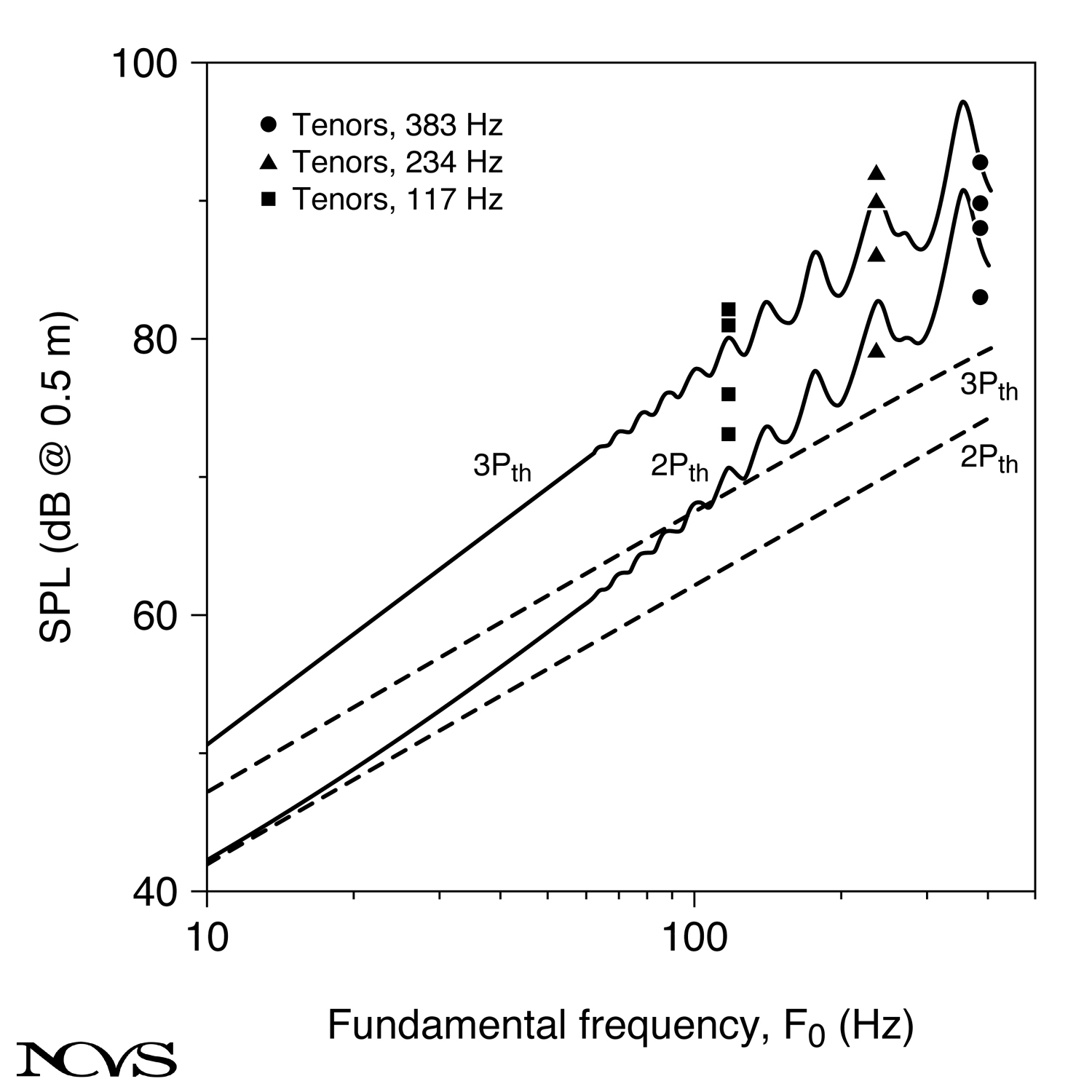 Figure 9.10: Formant tuning strategy showing how singers modify vowels to align F0 with F1 at high pitches, producing dramatic intensity enhancement through resonance matching and optimal impedance conditions.
High Pitch Strategy
As pitch rises toward and above the vowel’s normal F1:
- The singer raises F1 to meet F0 (F1 must move up, since F0 has climbed above it)
- Achieved through vowel modification
- Jaw opening increases—the most powerful way to raise F1
- Pharynx configuration adjusts
- Results in vowel convergence: closed vowels open toward [ɛ], [a] and [ɔ]
Acoustic Consequence
- F0 amplified by F1 resonance
- Dramatic intensity increase (10-15 dB possible)
- Without tuning, intensity would decrease at high pitch
- Enables forte singing at high frequencies
- Essential for soprano top notes
Vowel Modification Patterns
To raise F1 (toward rising F0):
- Open mouth wider
- Lower jaw substantially
- Increase lip opening (unrounding)
- Avoid lengthening the tract—larynx lowering and lip protrusion push F1 the wrong way
- Vowels converge toward /a/
Perceptual Trade-Off
- Enhanced intensity achieved
- Vowel identification may suffer
- Listeners accept modified vowels in singing context
- Intelligibility less critical than intensity
- Artistic conventions support practice
H2-F1 Tuning
Second Harmonic Strategy
Aligning second harmonic (H2 = 2F0) with F1:
- Common in alto, tenor, baritone ranges
- Provides intensity boost
- Preserves more vowel differentiation than F0-F1 tuning
- Requires different vowel modifications
- Less dramatic than F0-F1 tuning but still effective
Vowel Adjustments
- More subtle modifications possible
- Maintain better vowel intelligibility
- Strategic for mid-range singing
- Can alternate with F0-F1 tuning
- Individual preferences vary
Upper Formant Tuning
H3, H4, and Higher Harmonics
Tuning higher harmonics to F2, F3, F4:
- Contributes to timbre and “brightness”
- Less impact on overall intensity than F1 tuning
- Important for vowel quality maintenance
- Can enhance specific pitches
- Contributes to individual vocal timbre
Singer’s Formant Interaction
- Singer’s formant around 2.5-3 kHz
- Multiple harmonics may align with this cluster
- Additive intensity enhancement
- Particularly effective for projection
- Characteristic of trained classical voice
Formant Tuning in Speech
While less systematic than in singing, formant tuning occurs in speech.
Spontaneous Tuning
Natural Occurrence
- Happens when F0 sweeps through formant regions
- Automatic intensity modulation
- Contributes to prosodic patterns
- More prominent in high-pitched or emotional speech
- Generally unconscious process
Perceptual Consequences
- Momentary intensity peaks
- May enhance stress perception
- Affects voice quality perception
- Contributes to individual vocal character
- Interacts with linguistic function
Deliberate Projection Strategies
Public Speaking and Acting
Trained speakers may exploit formant tuning:
- Choose pitches that align with formants
- Modify vowels for projection
- More open articulation in general
- Strategic vowel selection in loud contexts
- Less systematic than singing but present
Cultural and Stylistic Variation
- Different languages favor different strategies
- Some performance traditions use more tuning
- Individual speaker variation substantial
- Training can enhance conscious control
- Context-dependent application
Vowel Modification Techniques
Achieving formant tuning requires systematic vowel adjustments.
Articulatory Strategies for Raising F1
Jaw Opening
- Most effective F1 manipulation
- Greater opening raises F1
- Can raise F1 by several hundred hertz—enough to track F0 up to about 1 kHz
- Relatively easy to control
- Immediate acoustic effect
Lip Spreading / Unrounding
- Widens the mouth opening
- Raises all formants, F1 included
- Combined with jaw opening
- Creates more extreme vowel modifications
- Useful for very high pitches
Tongue Position Adjustments
- Lower the tongue body and move the constriction back
- Narrows the pharynx relative to the mouth
- Raises F1 (and lowers F2), as in the shift from [i] toward [a]
- Affects vowel quality substantially
Other Adjustments
Pharyngeal Narrowing
- Narrowing the pharynx (as for [a]) raises F1 and lowers F2
- Works together with jaw opening
- Excess narrowing can create tension, so it is used with care
Lowering F1 Instead
- Lower voices sometimes need F1 kept above a strong harmonic to “cover” the tone rather than let the harmonic pass through the formant
- Lip rounding, larynx lowering and a more closed jaw all lower F1
- Fronting the tongue (toward [i]) also lowers F1 while raising F2
- These adjustments darken the timbre and forgo the F1 boost, so they are used selectively
Maintaining Vowel Intelligibility
Balance Between Tuning and Communication
Challenges:
- Maximum tuning may sacrifice vowel clarity
- Complete intelligibility may sacrifice intensity
- Singers must find acceptable compromise
- Context determines priorities (opera vs. recital)
- Training develops optimal strategies
Strategies for Compromise
- Preserve F2 and F3 relationships
- Maintain critical acoustic cues
- Time vowel modifications strategically
- Use consonants to aid identification
- Exploit listener expectations
Frequency-Dependent Tuning Strategies
Optimal tuning strategies vary across pitch range.
Low Pitch Range
Limited Tuning Opportunities
- F0 well below F1 (300-500 Hz distance)
- Harmonics abundant
- Multiple harmonics near each formant
- Specific tuning less critical
- Natural spectrum alignment sufficient
Strategy
- Focus on overall source power
- Maintain efficient glottal configuration
- Ensure good vocal tract resonance
- Avoid excessive modifications
- Emphasize consistent production
Mid Pitch Range
Optimal Tuning Range
- F0 approaching F1
- H2 or H3 often align with formants
- Strategic vowel choice effective
- Subtle modifications yield benefits
- Most natural singing range for many voices
Strategy
- Select vowels strategically for given pitches
- Moderate opening adjustments
- Monitor resonance sensations
- Develop register coordination
- Balance multiple acoustic goals
High Pitch Range
Critical Tuning Region
- F0 at or above typical F1
- F0-F1 tuning essential for intensity
- Extreme vowel modifications required
- Limited vowel differentiation possible
- Projection depends on tuning
Strategy
- Aggressive vowel modification
- Maximum jaw opening
- Accept vowel convergence
- Focus on intensity over intelligibility
- Master register transitions
Measurement and Assessment
Quantifying formant tuning aids pedagogy and research.
Acoustic Analysis
Spectrographic Analysis
- Visual representation of harmonic-formant alignment
- Track F0 and formants simultaneously
- Identify successful tuning instances
- Document vowel modifications
- Correlate with intensity measurements
Long-Term Average Spectrum (LTAS)
- Shows average spectral distribution
- Reveals consistent tuning patterns
- Identifies characteristic frequency emphases
- Useful for comparing singers
- Documents training effects
Real-Time Feedback
Visual Biofeedback Tools
- Display F0 and formants in real-time
- Singer can adjust until alignment achieved
- Accelerates learning of tuning strategies
- Makes implicit knowledge explicit
- Particularly useful for pedagogical purposes
Resonance Tube Feedback
- Semi-occluded vocal tract with tube
- Provides immediate tactile and auditory feedback
- Helps establish resonant sensations
- Facilitates exploration of configurations
- Bridges acoustic and kinesthetic awareness
Pedagogical Approaches
Teaching formant tuning requires systematic progression.
Progressive Skill Development
Stage 1: Awareness
- Introduce concept acoustically
- Demonstrate with recordings and analysis
- Help student perceive resonance differences
- Establish vocabulary for sensations
- Build conceptual framework
Stage 2: Exploration
- Experiment with vowel modifications
- Use biofeedback when available
- Develop range of configurations
- Identify individual optimal strategies
- Document successful patterns
Stage 3: Integration
- Apply tuning in musical contexts
- Coordinate with other technical demands
- Develop automaticity
- Refine based on acoustic feedback
- Establish consistent patterns
Stage 4: Artistry
- Select strategies for musical expression
- Balance technical and artistic goals
- Adapt to different acoustic environments
- Develop individual interpretive approach
- Maintain vocal health while maximizing effect
Common Pedagogical Challenges
Excessive Modification
- Students may over-modify vowels
- Vocal strain can result
- Sound quality may suffer
- Requires careful guidance
- Balance essential
Insufficient Modification
- Reluctance to alter familiar vowels
- Limits intensity potential
- Common in beginning singers
- Overcoming psychological resistance important
- Gradual progression helpful
Individual Variation
- Optimal strategies vary by individual
- Anatomical differences influential
- Personal aesthetic preferences matter
- Teacher must individualize approach
- One strategy not universal
Interaction with Other Intensity Strategies
Formant tuning complements other intensity-enhancing techniques.
Combination with Source Adjustments
Synergistic Effects
- Increased subglottal pressure + formant tuning
- Optimal adduction + formant tuning
- Each multiplies effect of other
- Total effect exceeds sum of parts
- Most effective when coordinated
Coordination Challenges
- Multiple simultaneous adjustments required
- Timing must be precise
- Training develops coordination
- Conscious control eventually becomes automatic
- High-level skill integration
Register Coordination
Register-Dependent Strategies
- Chest voice: typically less tuning needed
- Mixed voice: moderate tuning beneficial
- Head voice: tuning often critical
- Falsetto: tuning can compensate for weaker source
- Transitions require adaptive strategies
Voice Type and Gender Considerations
Optimal tuning strategies vary with vocal classification.
Soprano Voice
High Pitch Demands
- Frequent F0 above F1
- Consistent vowel modification essential
- Extreme tuning required for top notes
- Vowel convergence accepted convention
- Intensity depends heavily on tuning skill
Training Priorities
- Master progressive vowel opening
- Develop high-range coordination
- Build strength for modified positions
- Maintain flexibility across range
- Balance power and agility
Alto/Mezzo-Soprano Voice
Mid-Range Emphasis
- F0 approaches F1 less frequently
- H2-F1 tuning often primary strategy
- More vowel preservation possible
- Strategic selection important
- Balance of clarity and projection
Tenor Voice
Passaggio Challenges
- Critical tuning region around E4-G4
- F0-F1 alignment crucial for upper range
- Vowel modification conventions established
- Training focuses on this transition
- Historical precedent strong
Baritone/Bass Voice
Lower Pitch Range
- F0 typically well below F1
- Less reliance on extreme tuning
- Formant clusters more important
- Different projection strategies
- Emphasis on source power and resonance quality
Summary
Formant tuning represents the strategic alignment of harmonics with vocal tract resonances to maximize acoustic output, exploiting the 20-30 dB amplification available when a harmonic coincides with a formant frequency peak. The most dramatic application involves F0-F1 tuning where singers modify vowels to align the fundamental frequency with the first formant, particularly critical at high pitches where F0 rises toward or above typical F1 values. This requires systematic vowel modification through increased jaw opening, lip spreading, and tongue position adjustments that raise F1 to meet rising F0, resulting in vowel convergence toward /a/ but producing intensity enhancements of 10-15 dB essential for forte singing at high frequencies.
Alternative tuning strategies include H2-F1 tuning (aligning second harmonic with first formant) that provides intensity boost with better vowel preservation, and upper formant tuning (aligning higher harmonics with F2, F3, or singer’s formant) that contributes to timbre and brightness. While singing involves systematic and deliberate formant tuning, speech shows spontaneous tuning as F0 sweeps through formant regions, with trained speakers sometimes exploiting tuning for projection. Successful implementation requires balancing intensity enhancement against vowel intelligibility, with singers finding acceptable compromises that preserve enough acoustic cues for vowel identification while achieving necessary projection.
Pedagogical progression moves from acoustic awareness and exploration of modifications, through integration in musical contexts, to artistic application where technical strategies serve expressive goals. Optimal tuning strategies vary with pitch range (critical at high frequencies, less important at low), voice type (sopranos depend heavily on F0-F1 tuning, basses less so), and individual anatomy. Formant tuning produces synergistic effects when combined with source adjustments (increased pressure, optimal adduction), with multiplicative rather than additive intensity enhancements, making coordinated control of laryngeal and articulatory systems essential for maximum vocal efficiency and projection.
Key Takeaways
- ✅ Formant tuning aligns harmonics with formant frequencies to exploit 20-30 dB amplification at resonance peaks
- ✅ F0-F1 tuning through vowel modification (jaw opening, vowel convergence) produces 10-15 dB intensity increase at high pitches
- ✅ Sopranos raise F1 to meet rising F0 by opening the jaw, causing vowels to converge toward /a/ in the upper range
- ✅ Alternative strategies include H2-F1 tuning (better vowel preservation) and upper formant tuning (timbre enhancement)
- ✅ Balance between intensity and intelligibility requires preserving critical vowel cues while maximizing projection
- ✅ Optimal strategies vary with pitch range: critical at high frequencies, less important at low frequencies
- ✅ Formant tuning combines synergistically with source adjustments for multiplicative intensity effects
- ✅ Voice type influences tuning needs: sopranos rely heavily on extreme modifications, lower voices less so
Related Topics
- Vocal Tract Transfer Gain
- Vocal Ring (Singer’s Formant)
- Voice Range Profile
- Formant Frequencies
- Vocal Registers
Further Reading
- Sundberg, J. (1975). Formant technique in a professional female singer. Acustica, 32, 89-96.
- Joliveau, E., Smith, J., & Wolfe, J. (2004). Tuning of vocal tract resonances by sopranos. Nature, 427, 116.
- Miller, D. G., & Schutte, H. K. (2005). Formant tuning in a professional baritone. Journal of Voice, 19(1), 26-35.
- Titze, I. R. (2001). Acoustic interpretation of resonant voice. Journal of Voice, 15(4), 519-528.
- Sundberg, J. (2013). Perception of singing. In D. Deutsch (Ed.), The Psychology of Music (3rd ed., pp. 69-105). Academic Press.